Authentic
Fifteen days from imperial 北京 to the peaks of 张家界, from vertical 重庆 to the river at 宜宾, all the way to the pandas of 成都. The China that usually stays invisible — because we are part of it.
路线 The Route
Pechino
The imperial capital: two thousand years among the hutong lanes, the red walls and the sheer scale of Tian'anmen.
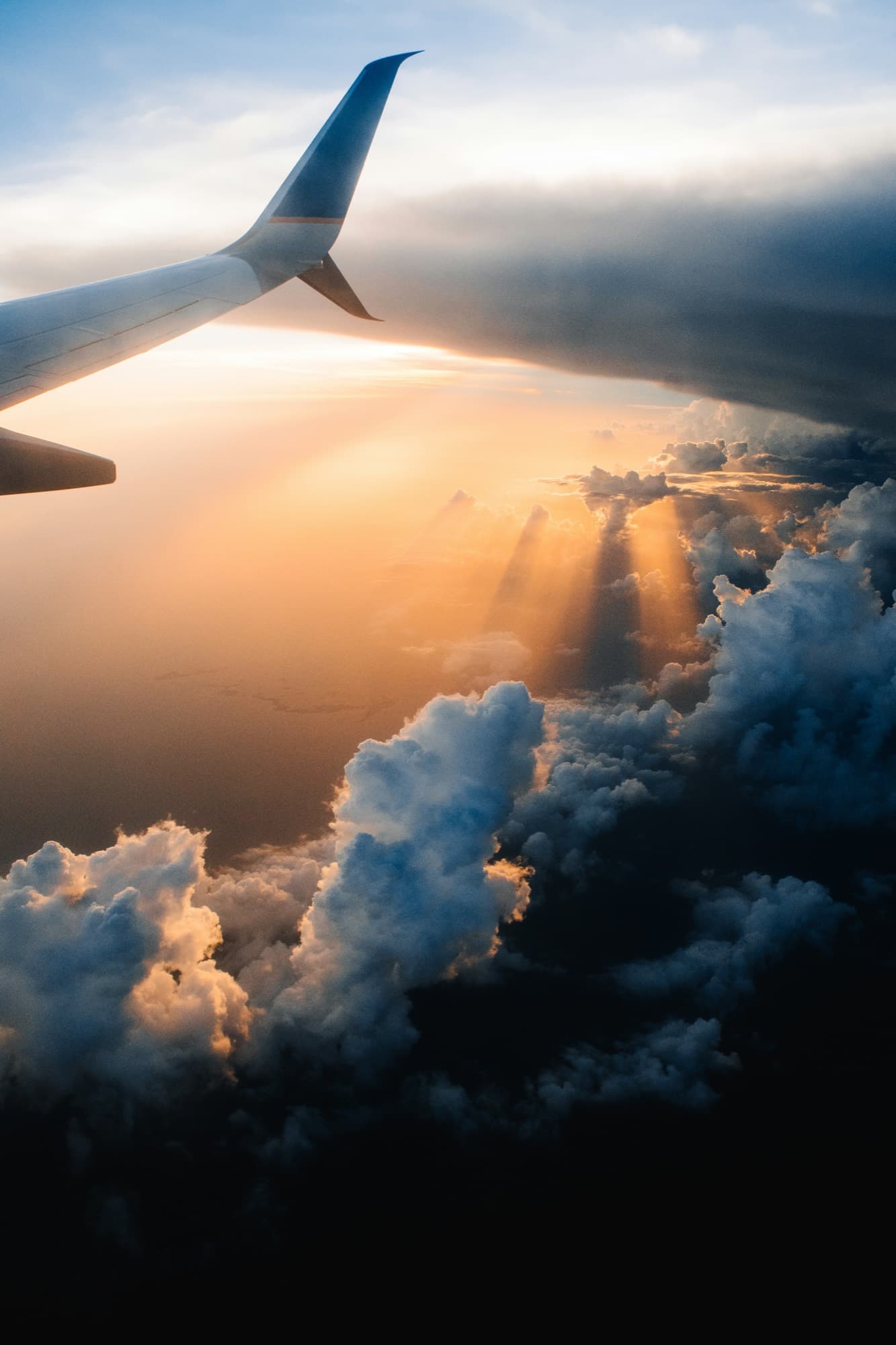
We gather at the gate in Rome with the international flight already included: no connection to chase, no ticket to piece together. The Italian tour leader is beside the group from the ground up — China, in a sense, begins right here, between the last words in Italian and the first announcement in 中文.
Nine hours above the steppes and deserts of Central Asia. Outside it is night; inside, that anticipation only a first journey to China can give keeps rising. Tomorrow we land in Beijing, at the dawn of another civilization.
This is not a transfer: it is the first threshold. You sleep little, and imagine a great deal.
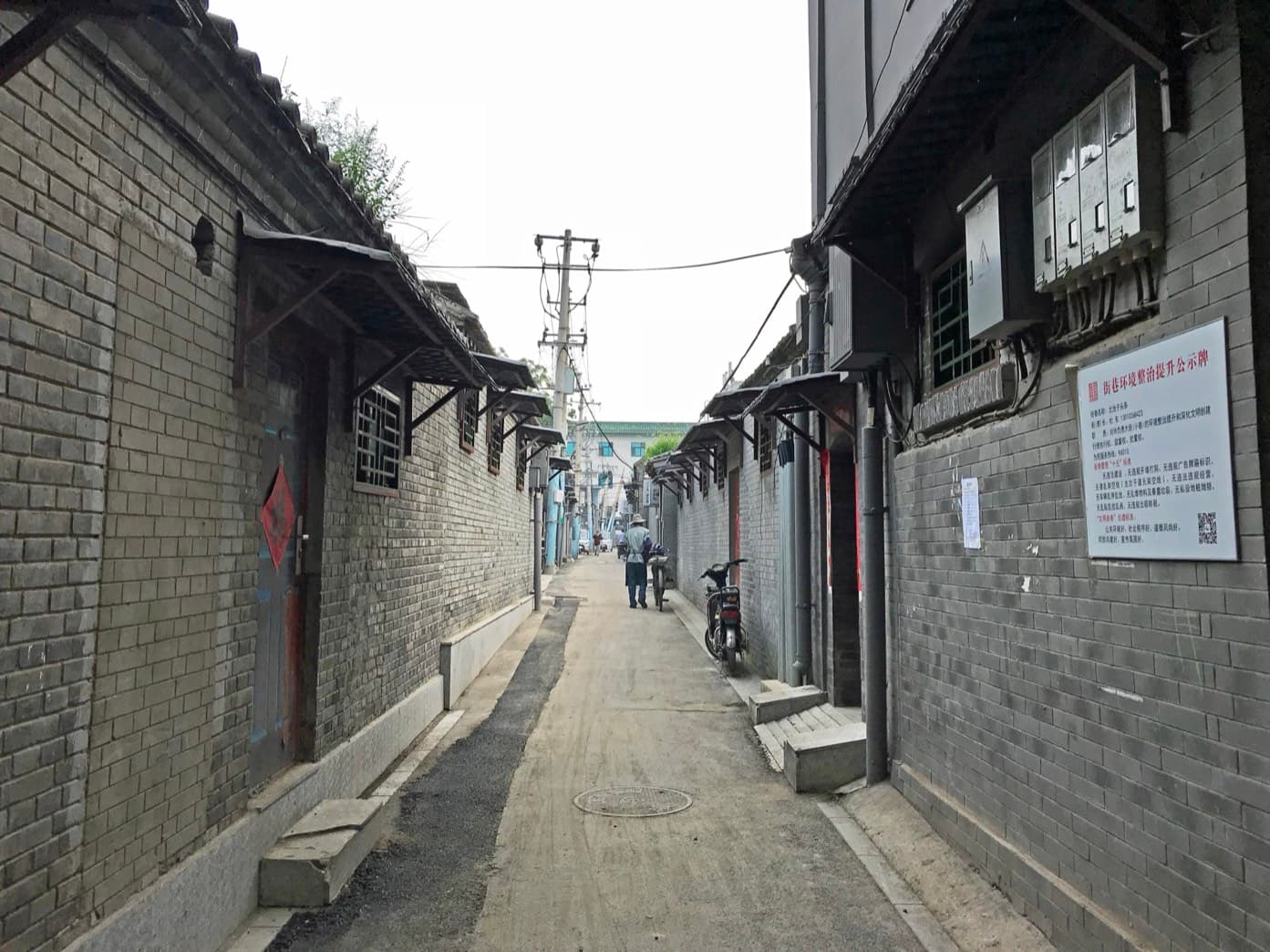
We land in 北京 (Beijing) and leave the airport behind to step straight into where the city truly breathes: the hutongs, the ash-grey lanes where life still unfolds on the doorstep. Laundry strung overhead, cyclists, kitchens fragrant with black vinegar and sesame, old men playing xiangqi (Chinese chess) in the shade. Our guides open courtyards — the siheyuan — that stay shut to ordinary groups.
From the lanes to sheer immensity: Tian'anmen Square (天安门), one of the largest in the world, where the scale of everything shifts at once and your breath opens up. We walk the imperial axis that has ordered the city for centuries, between the red gate and the monumental lamp posts.
The evening is free in the ancient heart: a wander among the lanterns of the Qianmen quarter, a snack of jianbing (a savoury buckwheat crêpe with egg and sauce) bought at the stall, the slow rhythm of the first time zone finally settling in.
Beijing doesn't welcome you: it tests you, then it adopts you. The real China has already begun, down in the lanes.
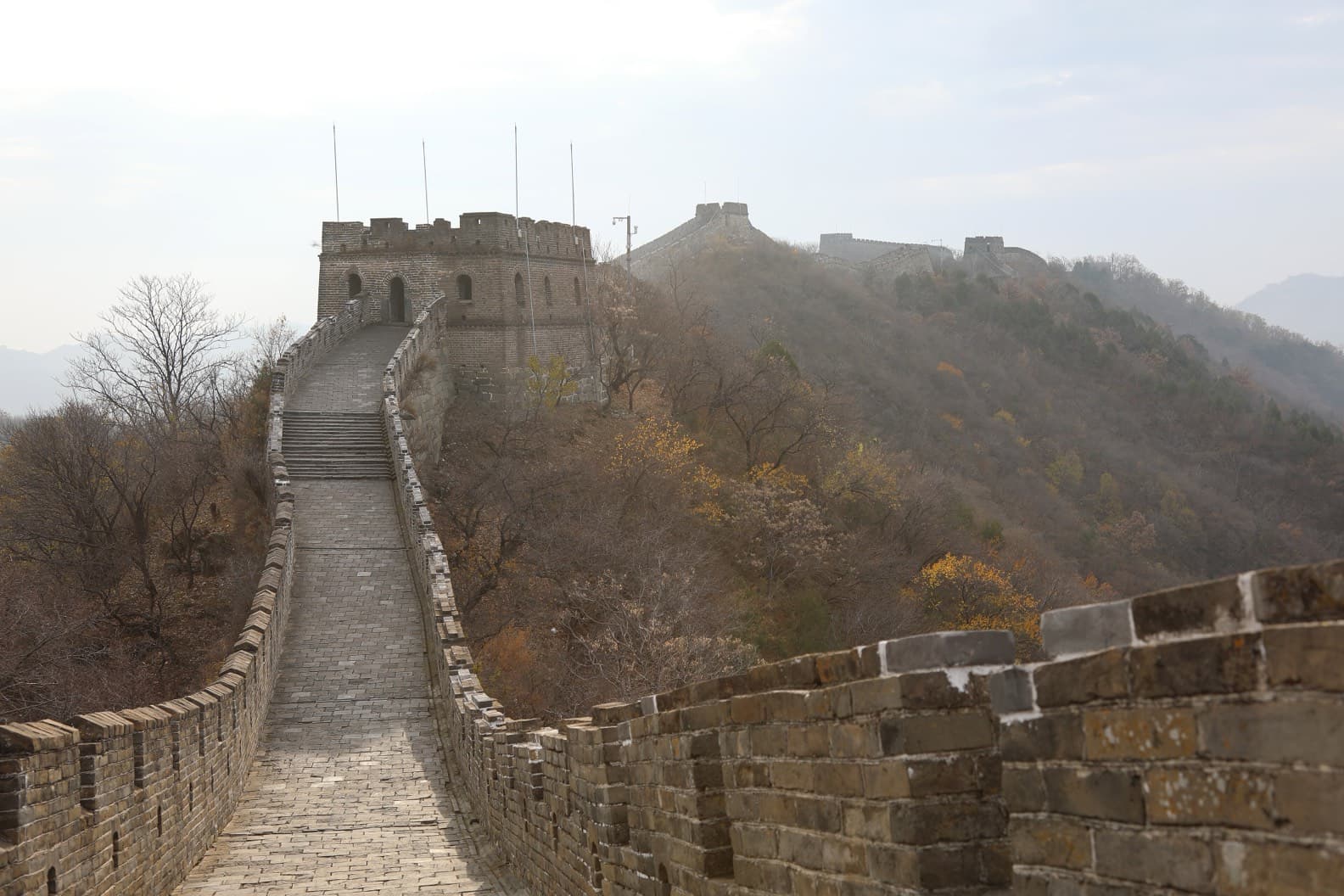
We set out early, with one precise reason: to reach Mutianyu (慕田峪) before the coaches. This is not the crowded postcard stretch — it is the less-trodden, steeper one, where the wall climbs the wooded ridges of the Yan mountains and disappears from sight, watchtower after watchtower.
We walk the Great Wall (长城) while the light is still low and the ramparts are almost our own. The dedicated photographer is with us for the portraits where the wall bends over the ridge — the ones you usually can't manage because there are too many people in the frame. Up and down by cable car, or on a toboggan run for anyone who fancies it.
We come down into the valley for a traditional lunch at a farmhouse inn: mountain greens stir-fried with garlic, hand-folded jiaozi (dumplings), free-range chicken with chilli. This is nongjiacai, country cooking — the flavour tourist menus never carry.
The Wall, done right
Not all Great Walls are equal. Badaling is close and effortless, and buried in crowds for exactly that reason. Mutianyu — restored along the 16th-century Ming line, guarded by 22 watchtowers — offers the same imperial wall with a fraction of the people. We go early, for the same reason anyone who lives here would: to be alone with history.
The wall never really ends: it loses itself among the mountains and carries on without you. But for one hour, this morning, it was yours.
 Summer Palace
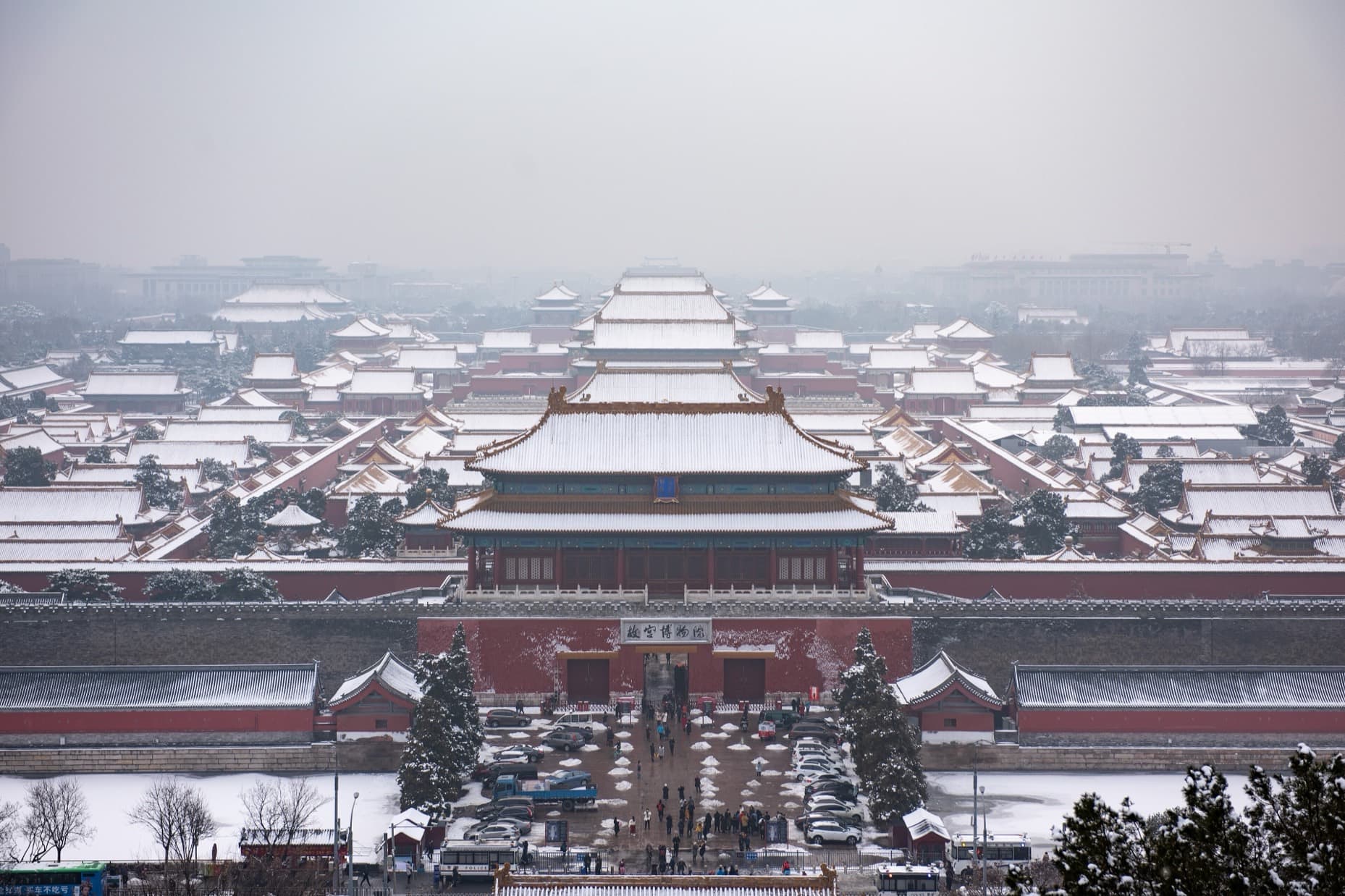
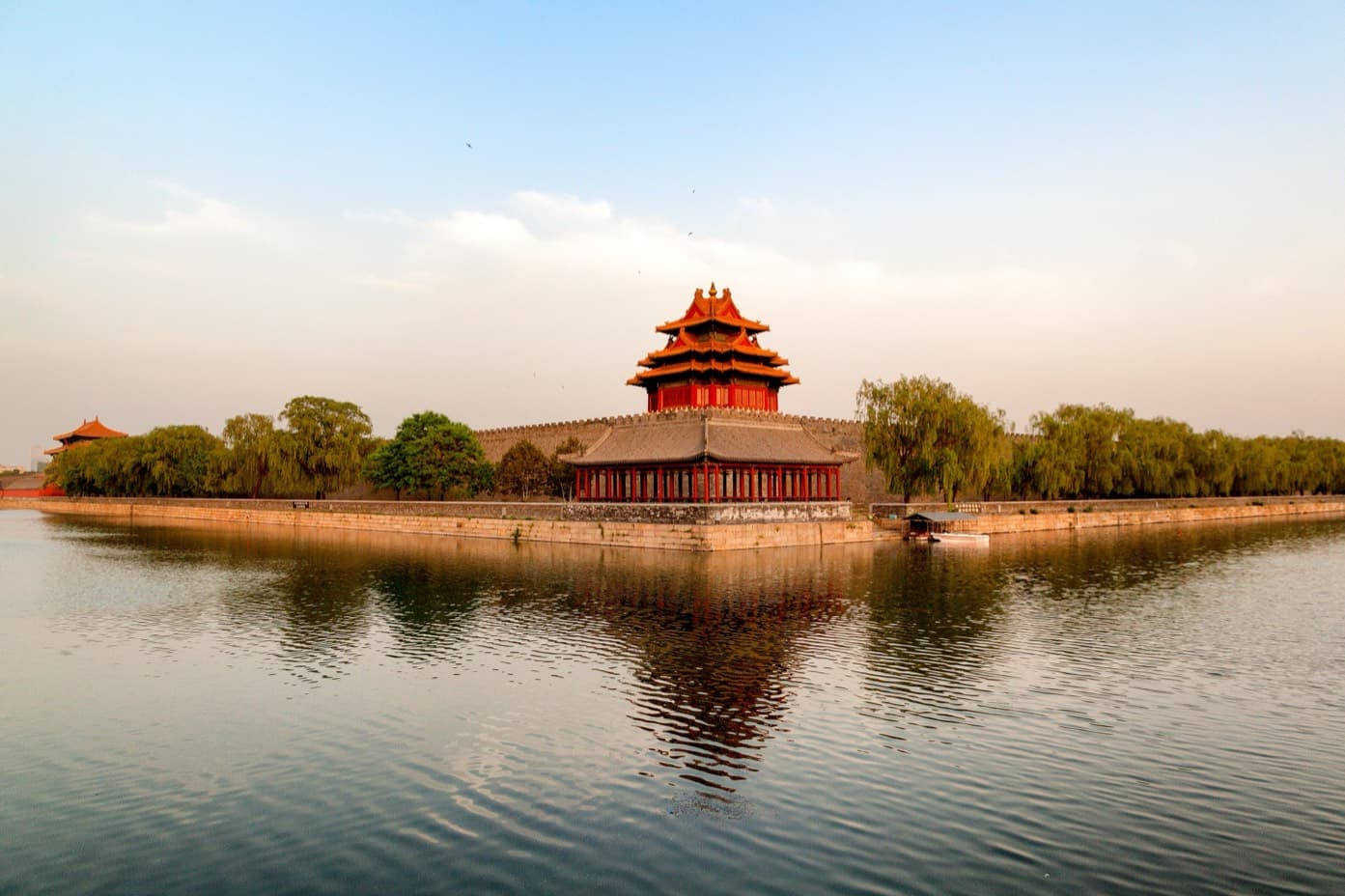
The Forbidden City (故宫): 72 hectares of courtyards, golden roofs and red-lacquered gates, the palace that for almost five centuries no ordinary mortal could cross. Tickets and timings are already arranged — no queue, no wait. We cross the ceremonial axis hall after hall, from the Gate of Supreme Harmony to the emperor's intimate gardens.
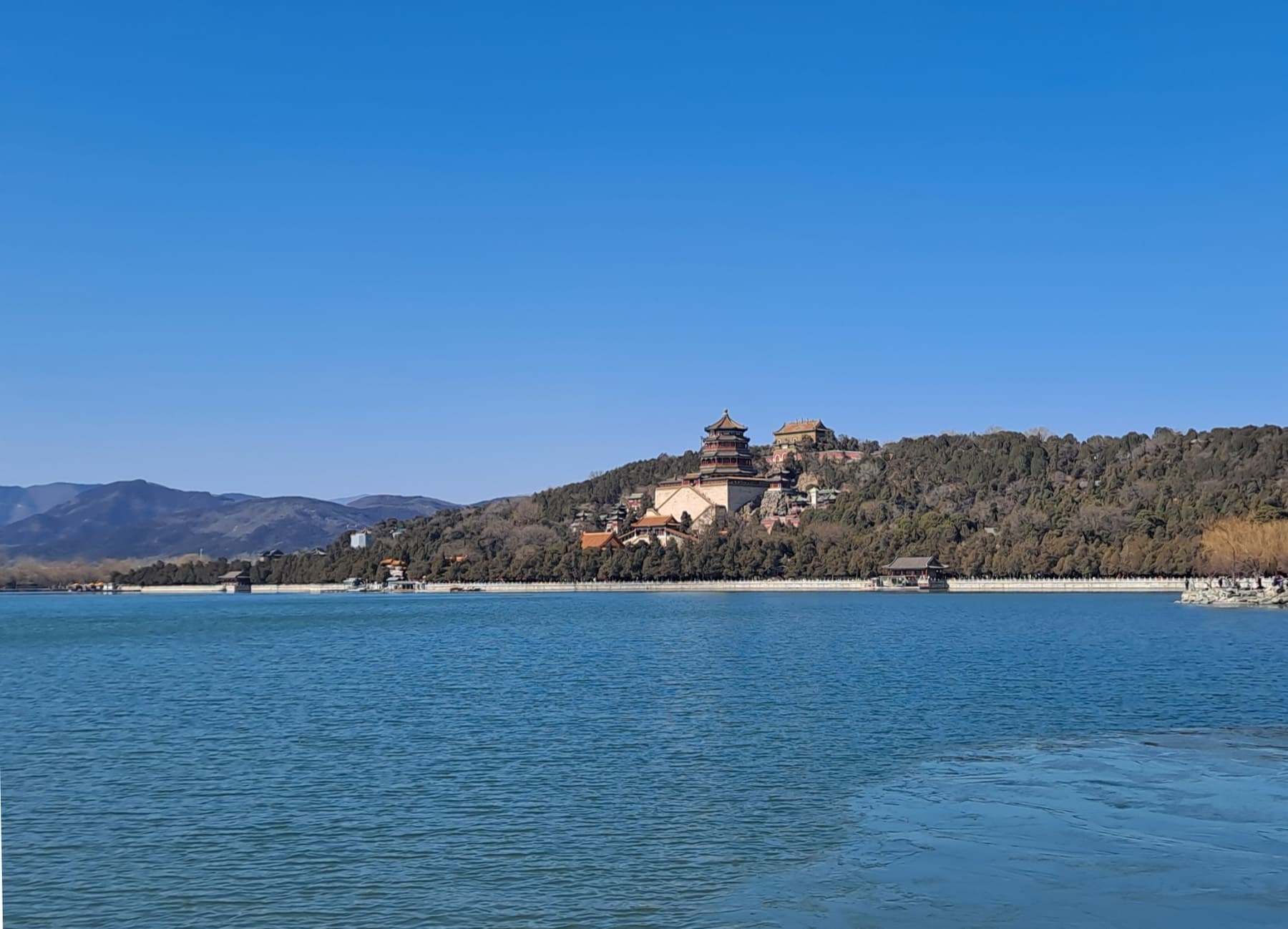
In the afternoon the mood shifts: the Summer Palace (颐和园), the court's water-bound retreat, where Kunming Lake mirrors Longevity Hill and the painted Long Corridor runs 700 metres along the shore. This is where the emperors came to escape the summer heat — and you can see why.
An unhurried return. A free evening for one last Peking duck or a stroll through the neon of Wangfujing, before China changes its face entirely tomorrow.
Two millennia in a courtyard
Begun in 1406 and completed in 1420, the Forbidden City was the seat of power for 24 Ming and Qing emperors. Legend grants it 9,999 and a half rooms — only heaven could hold ten thousand. Fourteen years of work, a million labourers, and a geometric axis that aligns the whole of Beijing to the throne. It is not a museum of objects: it is the museum of an idea of order.
In four days Beijing has shown you the empire. Tomorrow China turns to mountain and mist.
Zhangjiajie
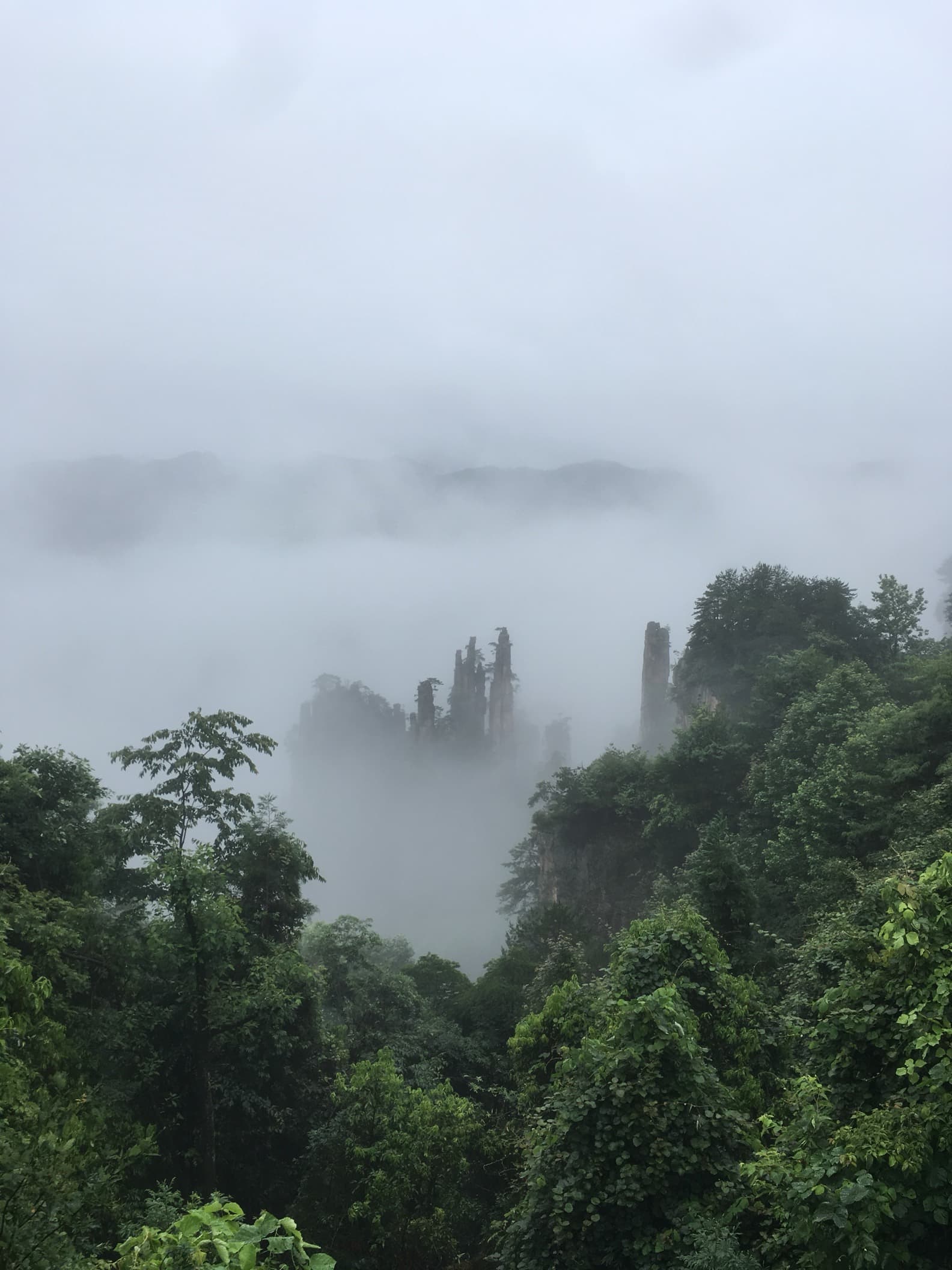
The sandstone pillars that inspired Avatar, suspended in the mist of Hunan.
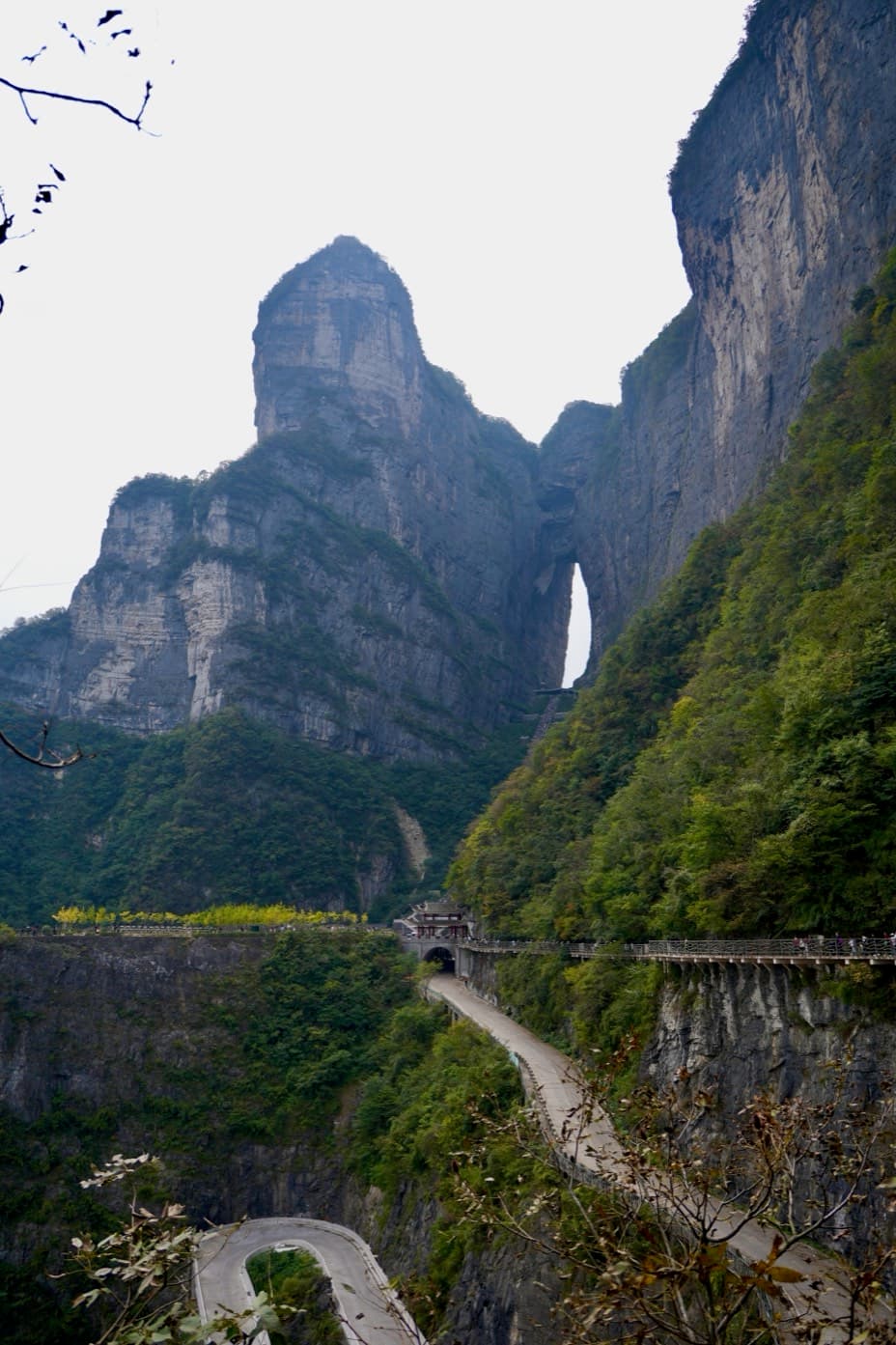
We fly south, into Hunan — about three hours that cut across half of China, from imperial capital to forest of stone. Zhangjiajie (张家界) greets us with a different air: damper, greener, heavy with that mist which here never quite lifts.
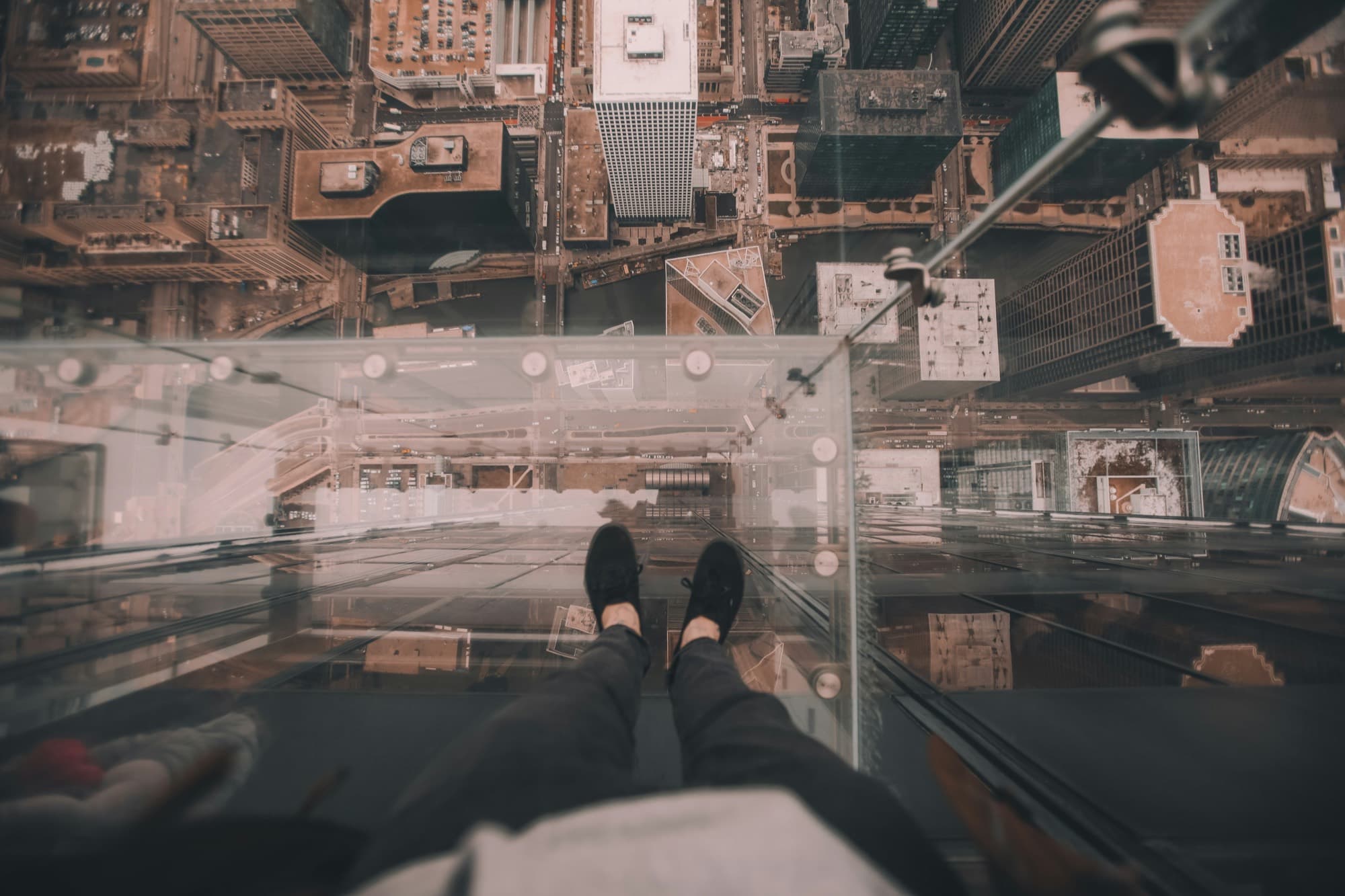
We climb Mount Tianmen (天门山). The cableway is among the longest in the world: nearly eight kilometres suspended above the road of 99 bends, which spirals up the cliff face like a ribbon gone wild. At the top, Heaven's Gate (天门洞) — a natural arch carved into the rock at 1,300 metres, reached by a staircase that seems to climb into the void. The glass walkway juts out over the sheer drop, for anyone with the stomach to look down.
We descend for the night to the foot of the massif. Outside, the fog swallows the peaks; inside, the silence after a vertical day. Tomorrow we enter the park that made Zhangjiajie a legend.
Tianmen isn't visited: you climb it, and then it looks down on you. Here, the mountain is the true capital.
 Bailong Elevator
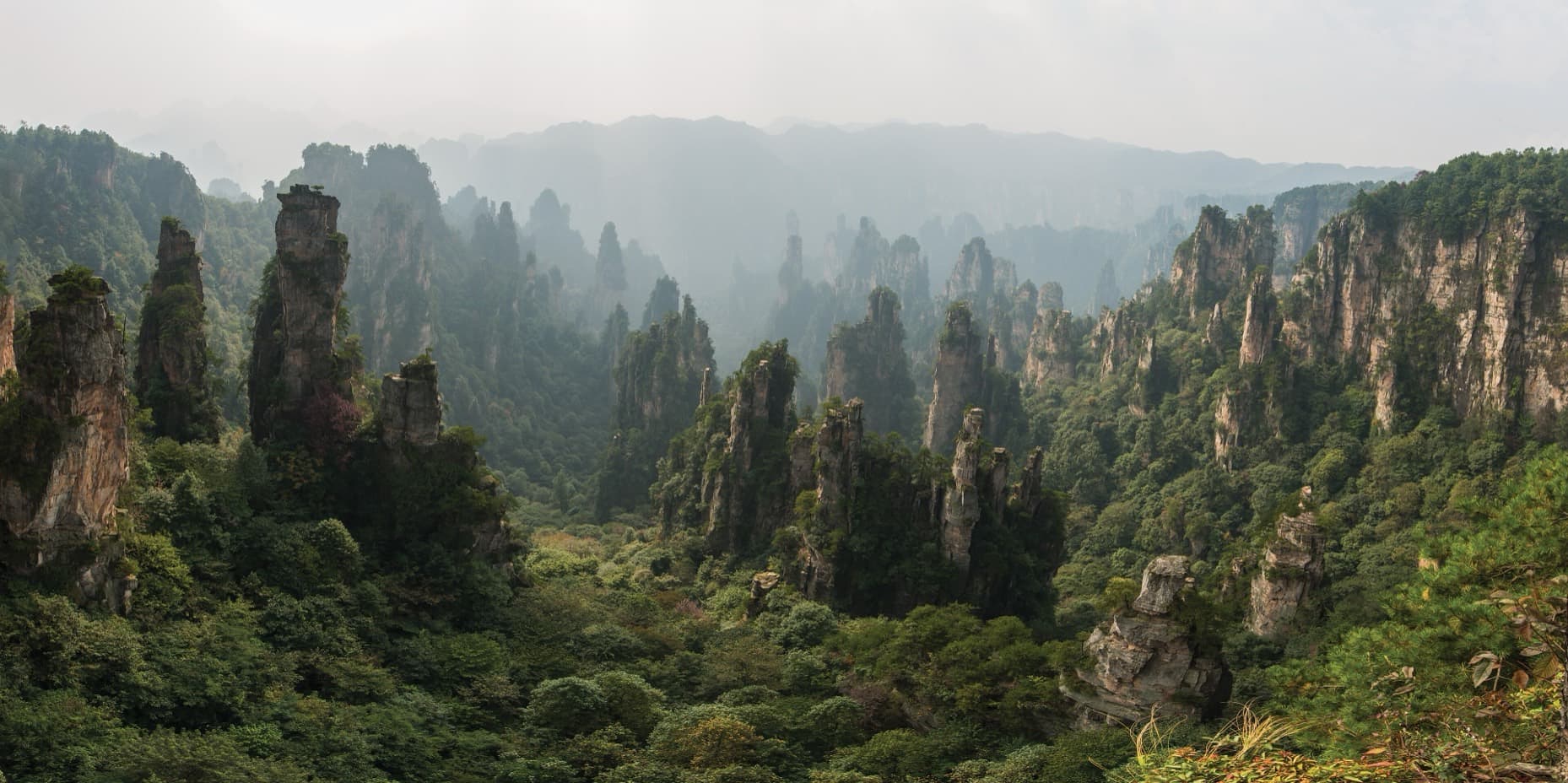
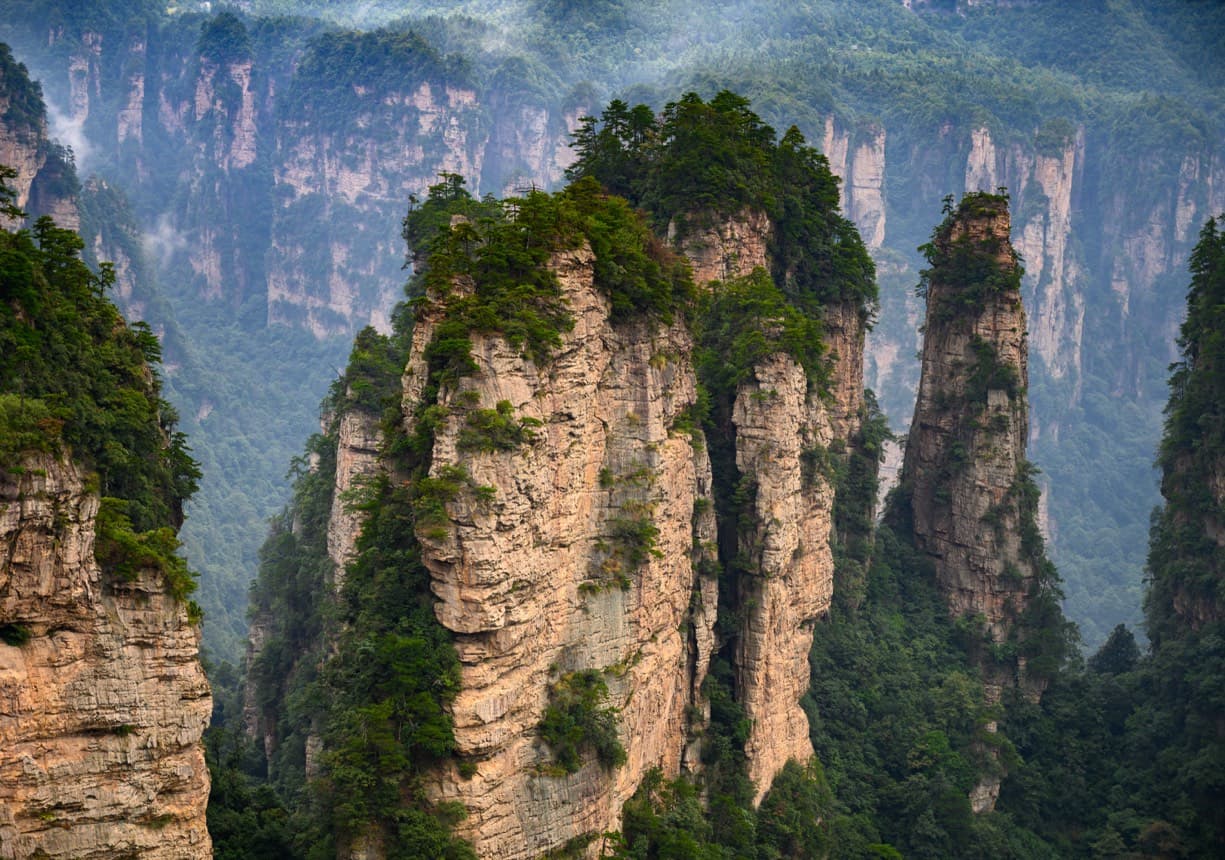
We enter Wulingyuan National Park (武陵源) and climb up to Yuanjiajie (袁家界), where three thousand sandstone columns rise from the forest like a wood made of stone. When the mist rises, the peaks float and the ground vanishes beneath them. This is the landscape that inspired the floating mountains of Avatar — and in the flesh it is more unreal than the film.
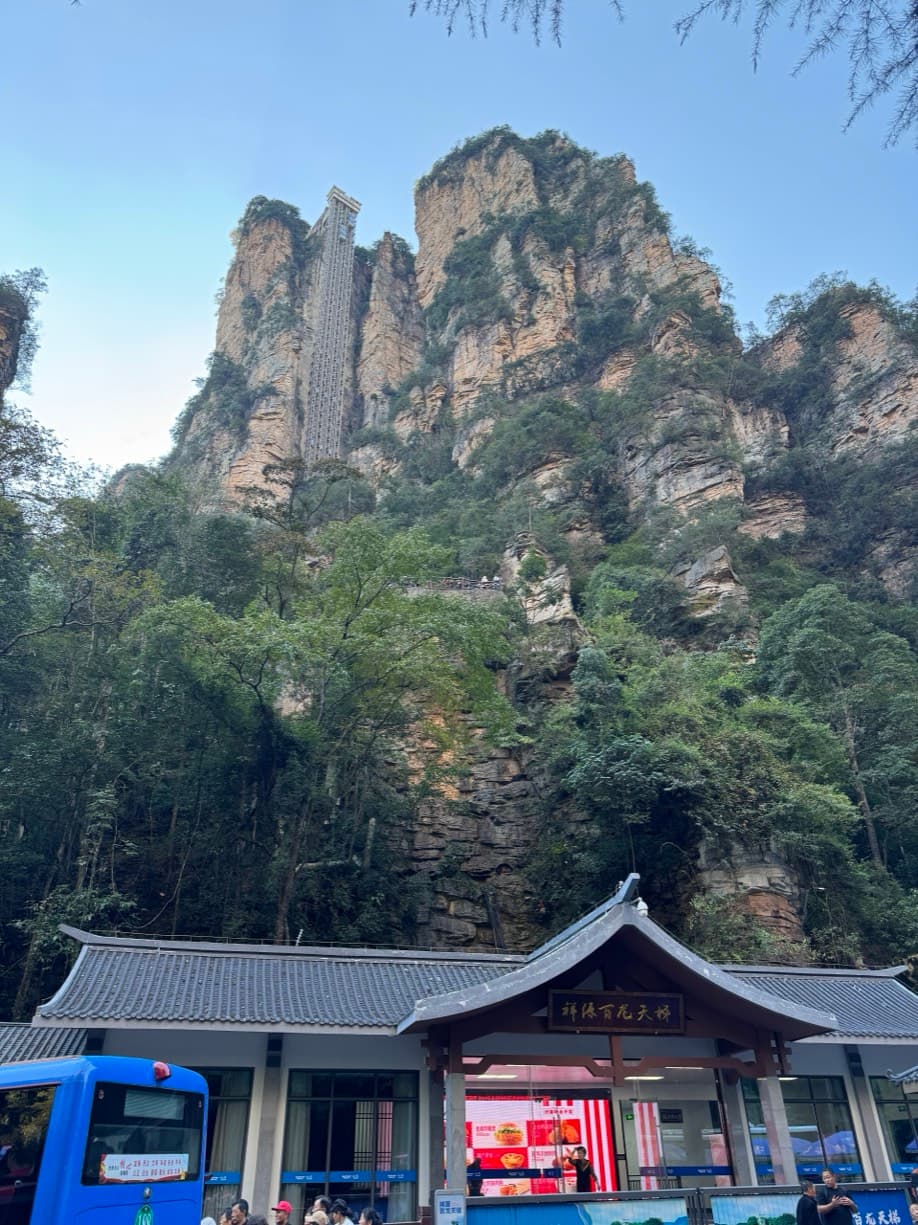
The Bailong Elevator (百龙天梯) carries us up 326 metres of vertical cliff in a little over a minute — the tallest outdoor sightseeing elevator in the world, its glass cabin glued to the rock. We then walk along suspended boardwalks and bridges from one pinnacle to the next.
A traditional lunch high up, with the smoky, fiery cooking of Hunan: larou (bacon smoked over the hearth), fermented tofu, mountain greens. You eat with the peaks themselves for walls.
Wulingyuan, the forest of stone
A UNESCO World Heritage Site since 1992, Wulingyuan counts more than 3,000 quartz-sandstone pillars, some over 200 metres tall, carved by 380 million years of erosion. The most famous was renamed "Hallelujah — Avatar Mountain" after Cameron's film. The park is so vast you cross it by shuttle, cable car and an elevator cut into the mountain: the most spectacular nature in Asia, and that's no brochure exaggeration.
The mountains of Zhangjiajie never hold still: the mist lifts them and sets them back down. Watching them is like watching the earth breathe.
Chongqing
The vertical metropolis on the Yangtze: the metro threading through tower blocks, the lights that never go out.
 Skyline from the river
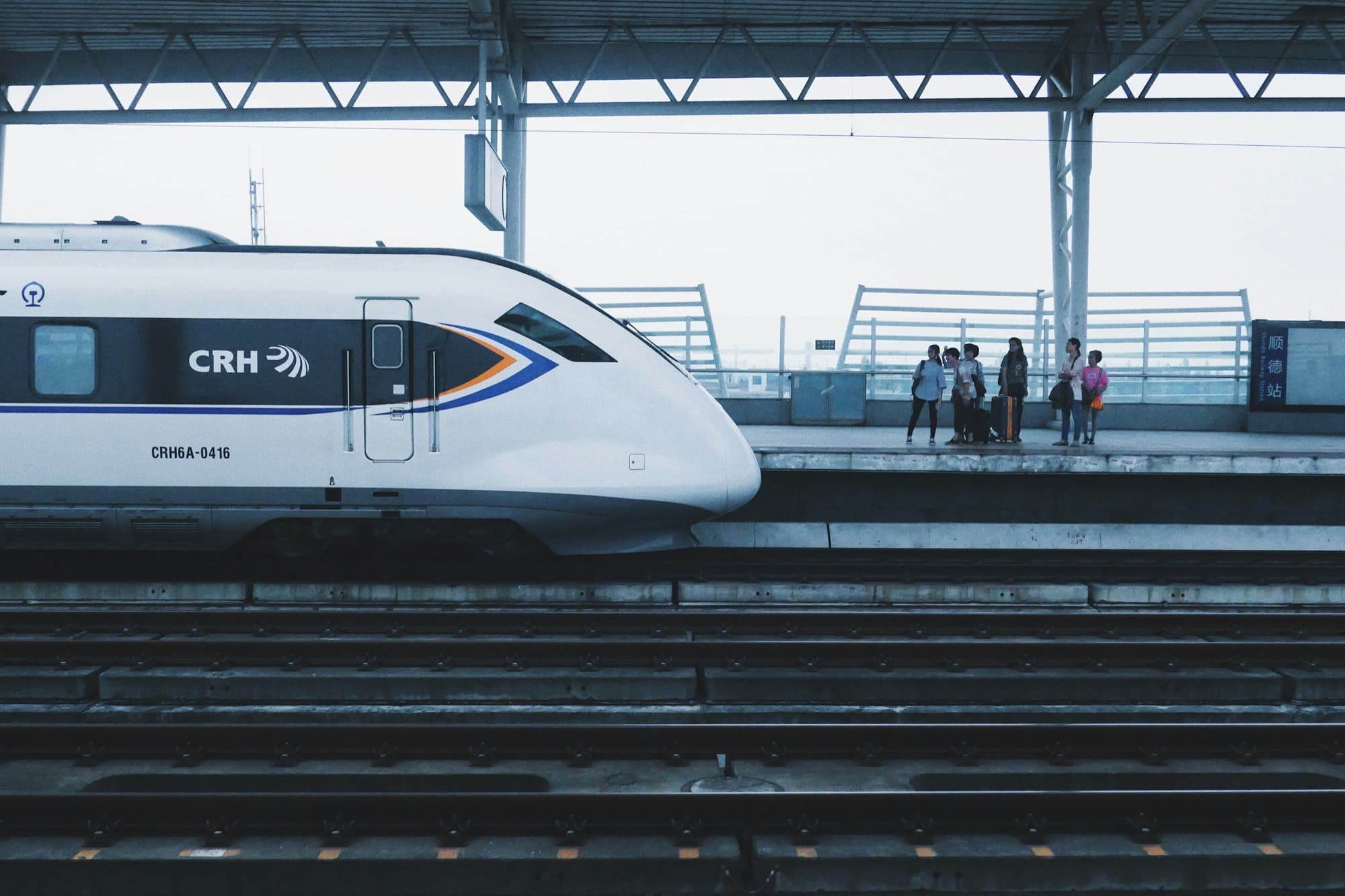
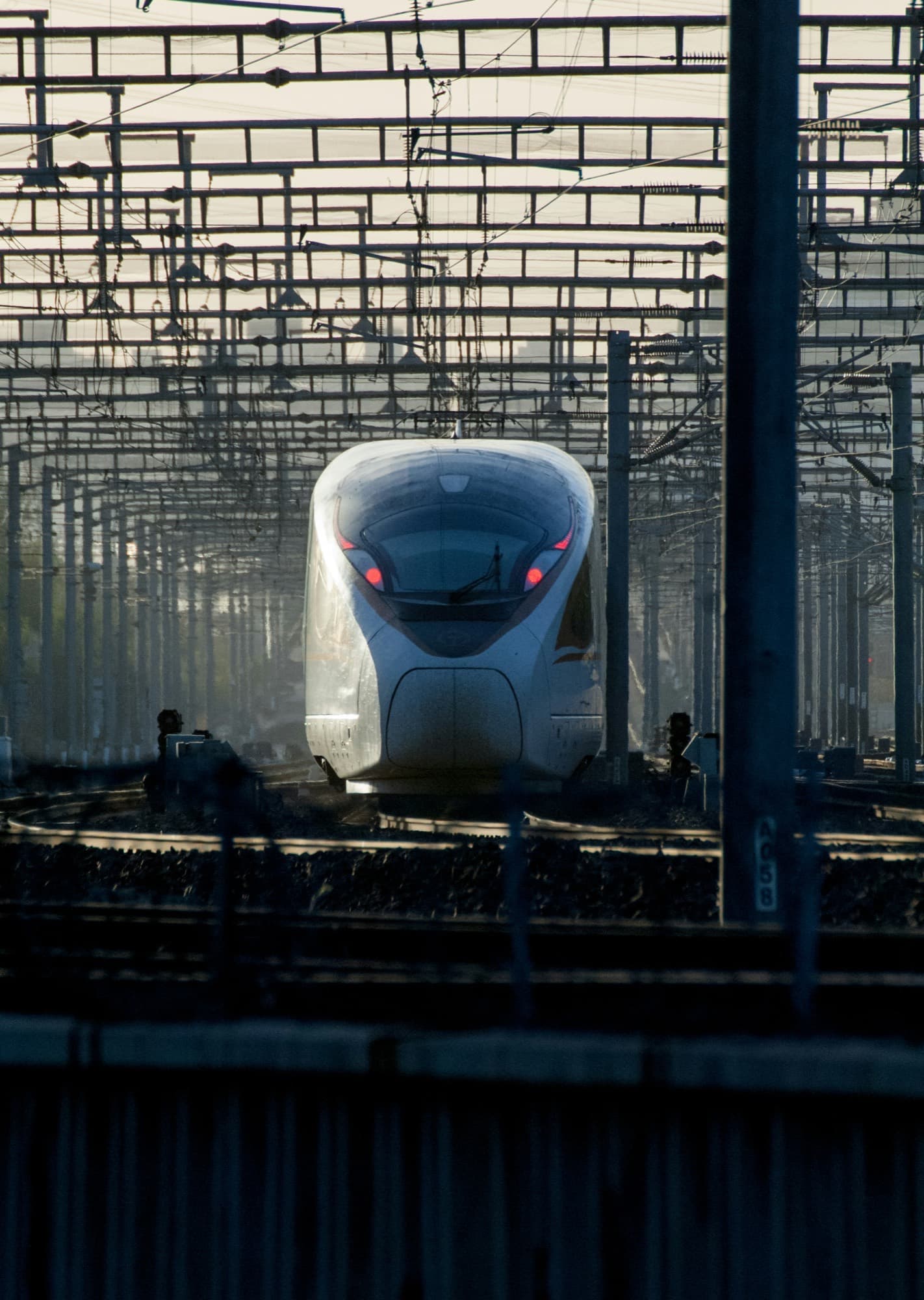
We board the high-speed train toward 重庆 (Chongqing) — about four hours in which green Hunan gives way to bridges slung over deep gorges and the first skyscrapers piercing the haze. The Chinese train is an experience in itself: punctual to the minute, silent, hurled between mountains and viaducts.
Chongqing is the most vertical megacity you will ever see: thirty million people clinging to a spur of rock between two rivers, the Yangtze (长江) and the Jialing (嘉陵江). We settle into the heart of Jiefangbei (解放碑), among neon signs and shopping centres that climb twenty floors high.
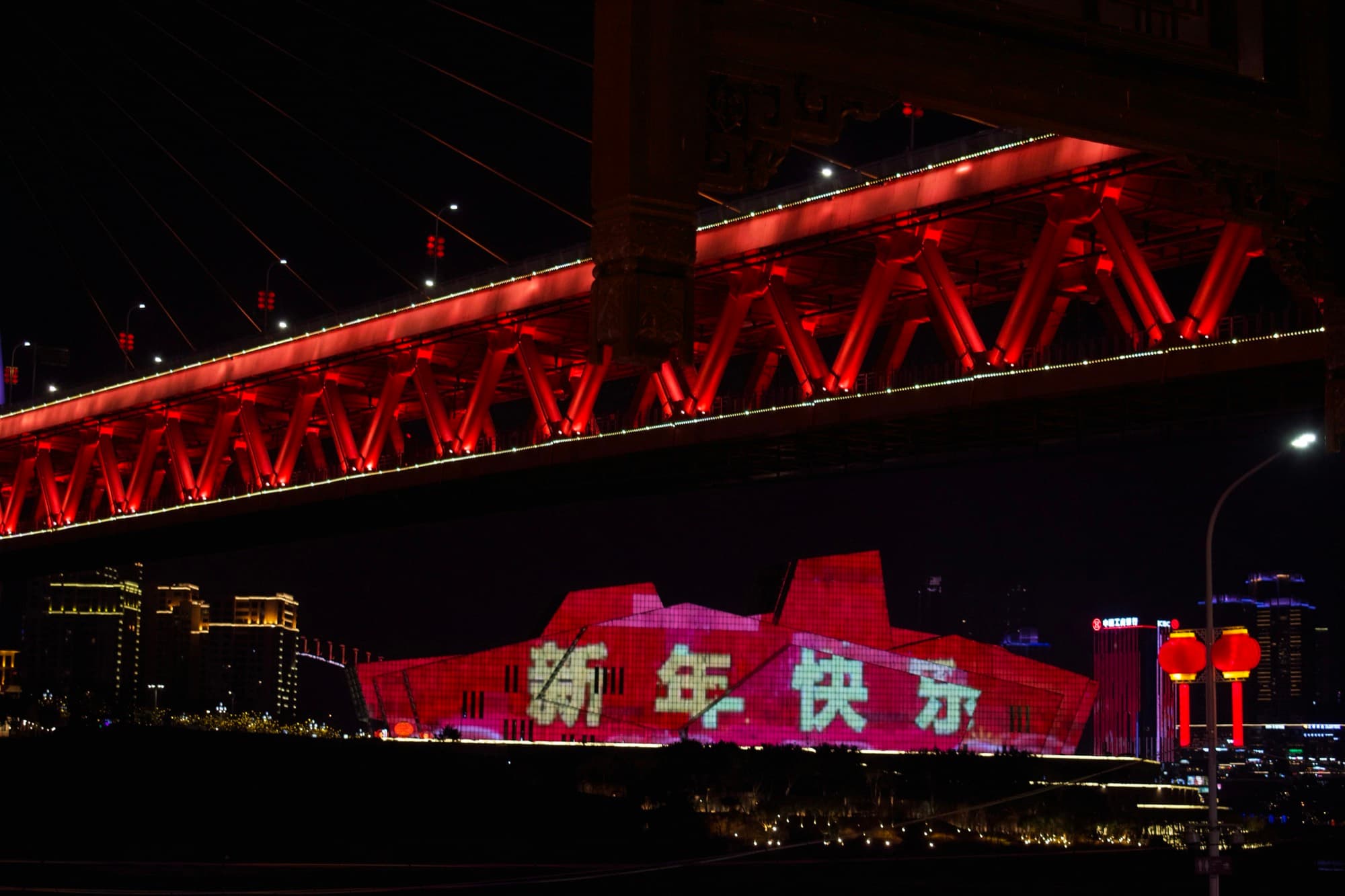
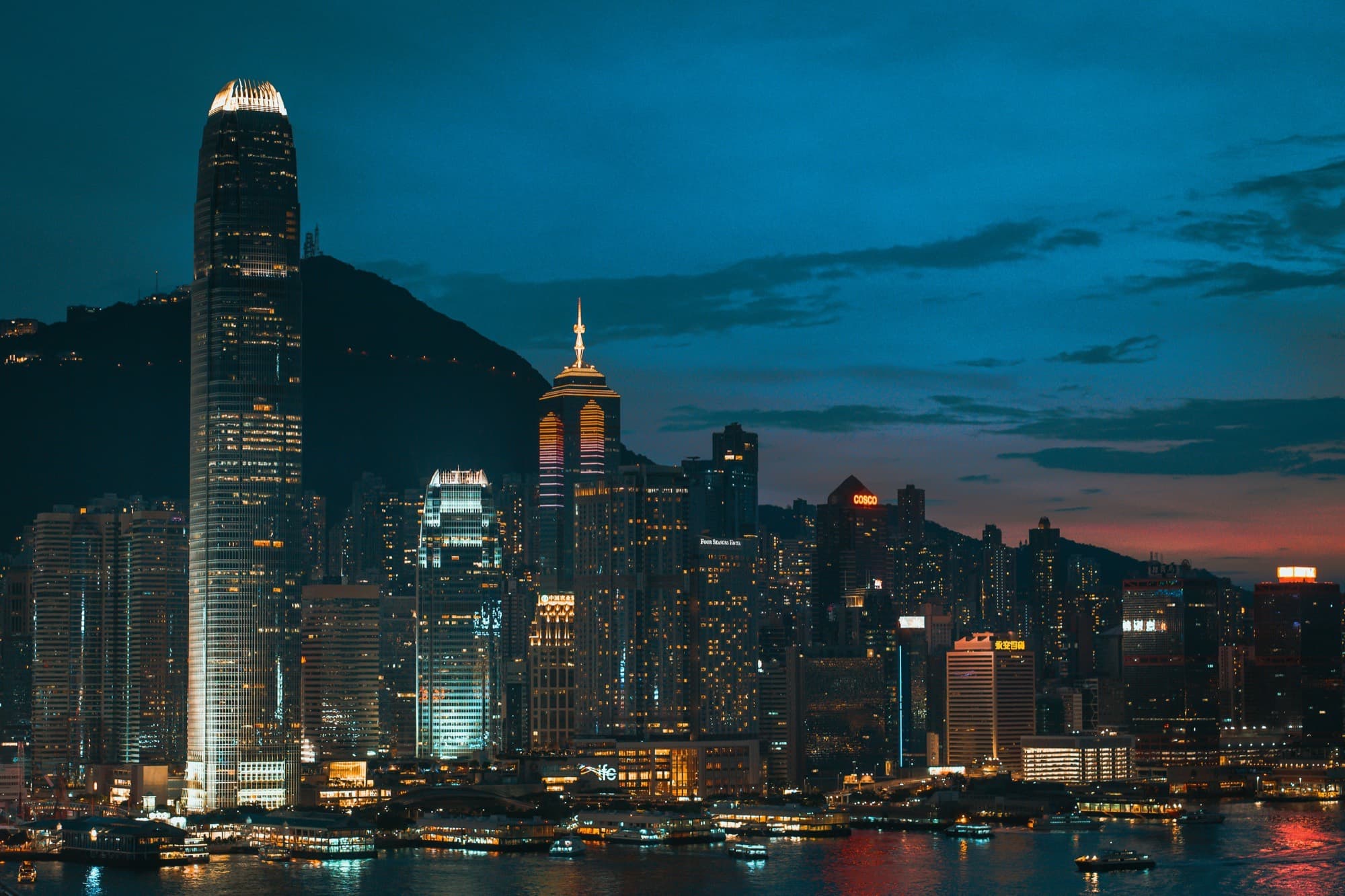
As darkness falls the city ignites all at once. We take up a spot on the riverfront for the evening show of the illuminated skyline: screen-clad towers shifting colour, bridges lighting up one after another, the light bleeding into the black water of the two rivers. It feels like standing inside a science-fiction film shot for real.
The first evening in Chongqing is a sea of lights where the sky should be. The vertical city doesn't sleep, and it won't let you sleep either.
 Ciqikou
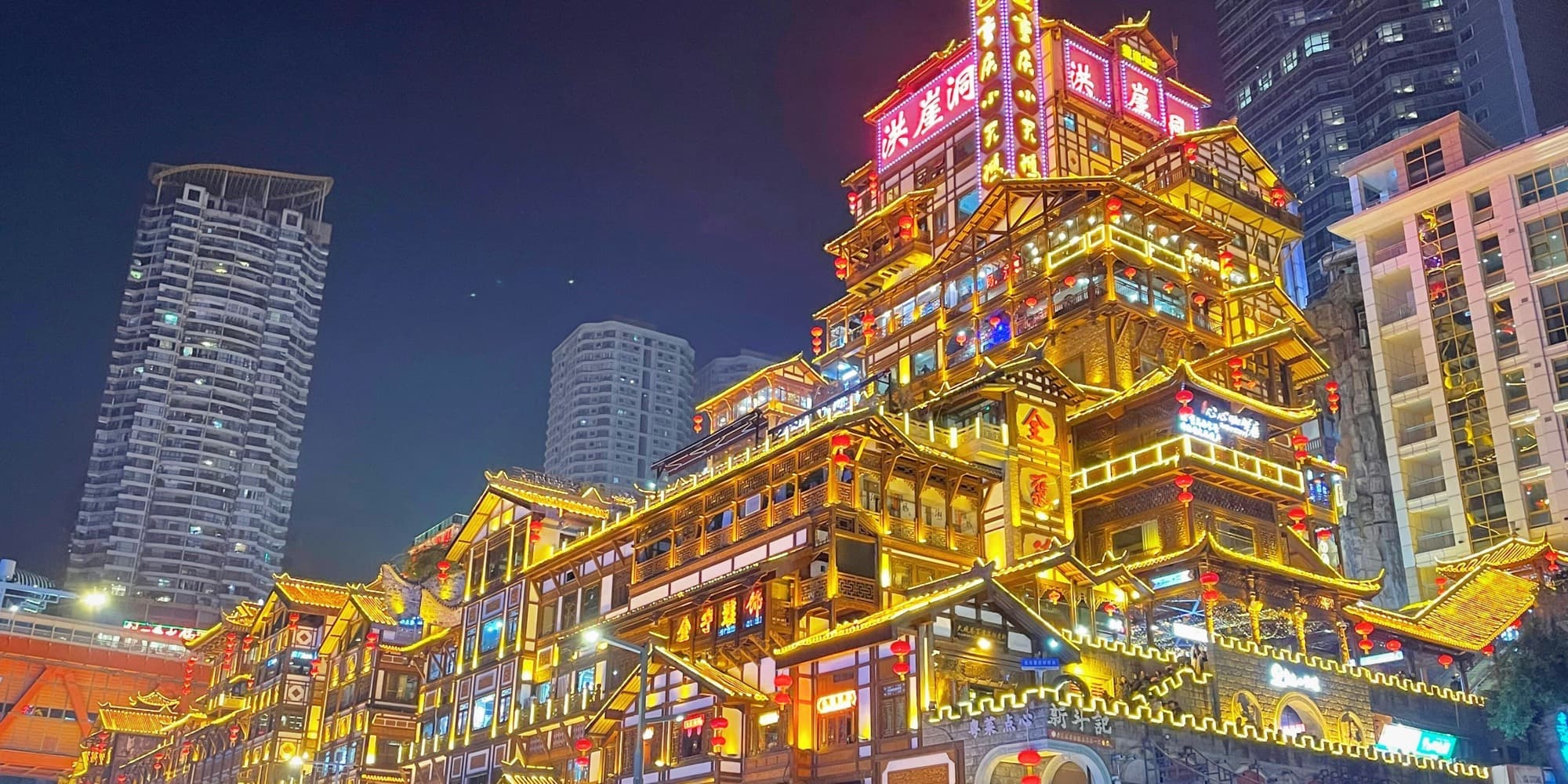 Hongyadong by night
We begin in the old town of Ciqikou (磁器口), the former "Porcelain Port": paved lanes dropping toward the Jialing, tea houses, the street of mahua (crisp fried dough twists), the Baolun Temple amid incense and bells. The slow tempo before the day's high point.
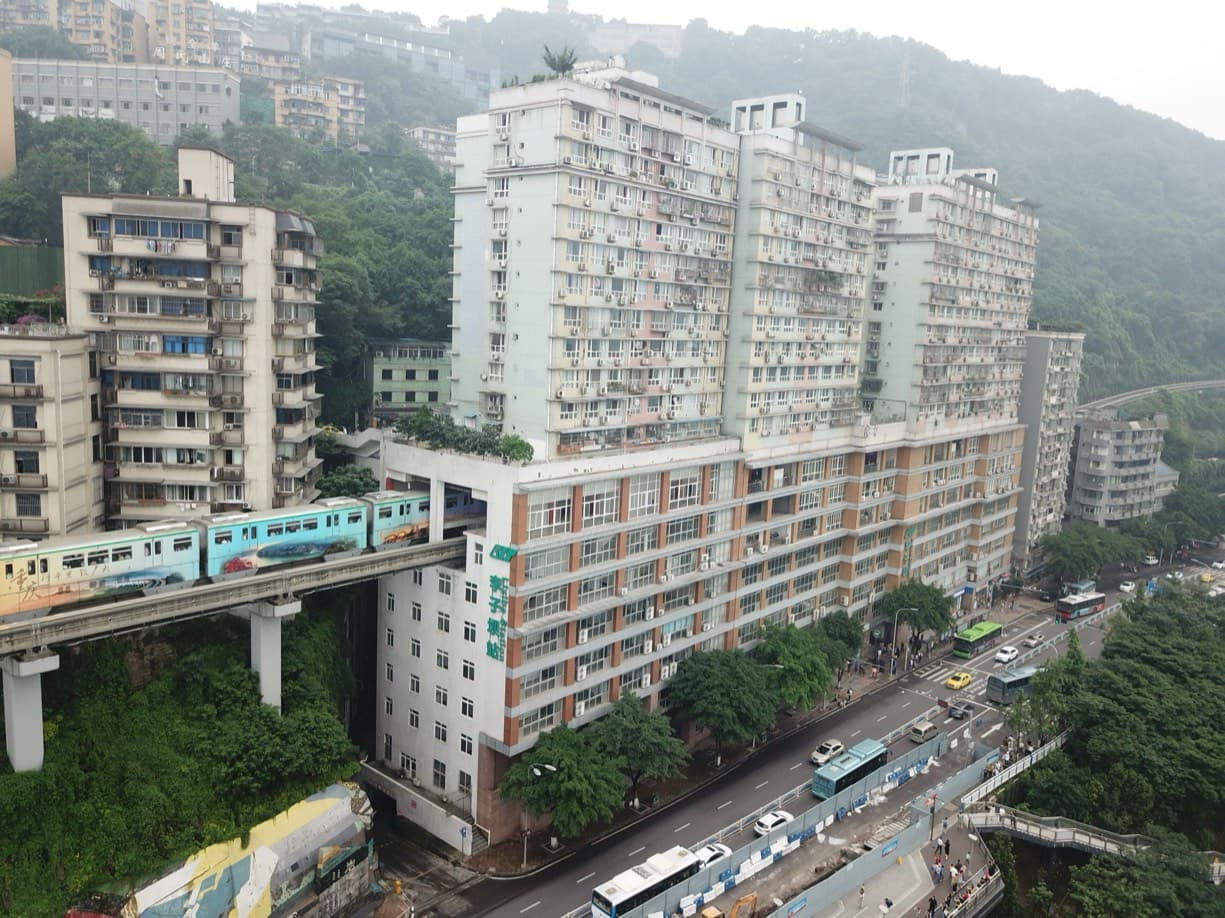
Then the thing that sounds unbelievable when you say it aloud: at Liziba station (李子坝) the metro runs straight through a lived-in tower block of nineteen floors — the train enters on the sixth and exits on the eighth, while above and below people go on living in their own flats. It's no tourist gimmick: it's how Chongqing solves the shortage of flat ground. We take you to the exact spot to watch it pass.
Only with usIn the evening Hongyadong (洪崖洞): eleven storeys of stilt houses clinging to the cliff above the river, thousands of golden lanterns lit all at once. It looks like Miyazaki's Spirited Away made real. A free dinner with a view, then the Qiansimen bridge lit up in red.
The city that climbs vertically
In Chongqing an address isn't enough: you need to know which floor. Built on steep ridges between two rivers, the city stacks streets upon streets — what is the ground floor on one side is the tenth on the other. The metro cuts through buildings because there's nowhere else to run it, the open-air escalators are as long as roads, and satnavs lose their minds. It's the maddest and the most logical urban planning in the world, both at once.
Here up and down blur together, and you along with them. In Chongqing you don't find your bearings: you surrender, and you enjoy it.
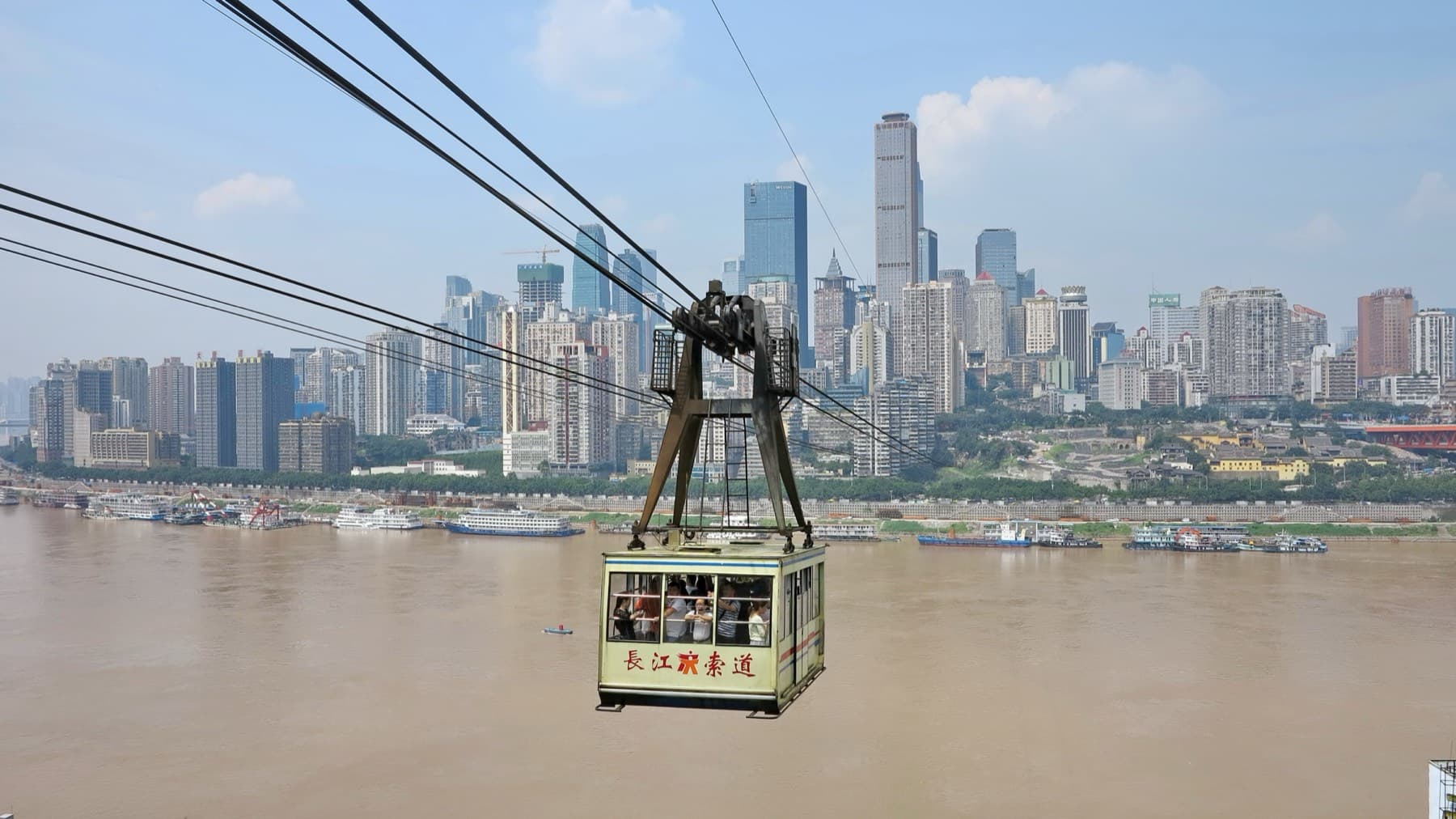 Yangtze cable car
A morning in the commercial heart of Jiefangbei (解放碑): the main shopping streets, the vertical malls climbing out of sight, the Chinese brands you've never seen and the neighbourhood boutiques. Time to browse, to bargain, to take home something you'd never find in Italy.
In the afternoon we board the Yangtze cable car (长江索道), an old cabin that vaults the river in mid-air with the skyline on either side — for locals it's a means of transport, for us it's the finest view in the city. On the far bank, a riverfront from which Chongqing can be taken in whole.
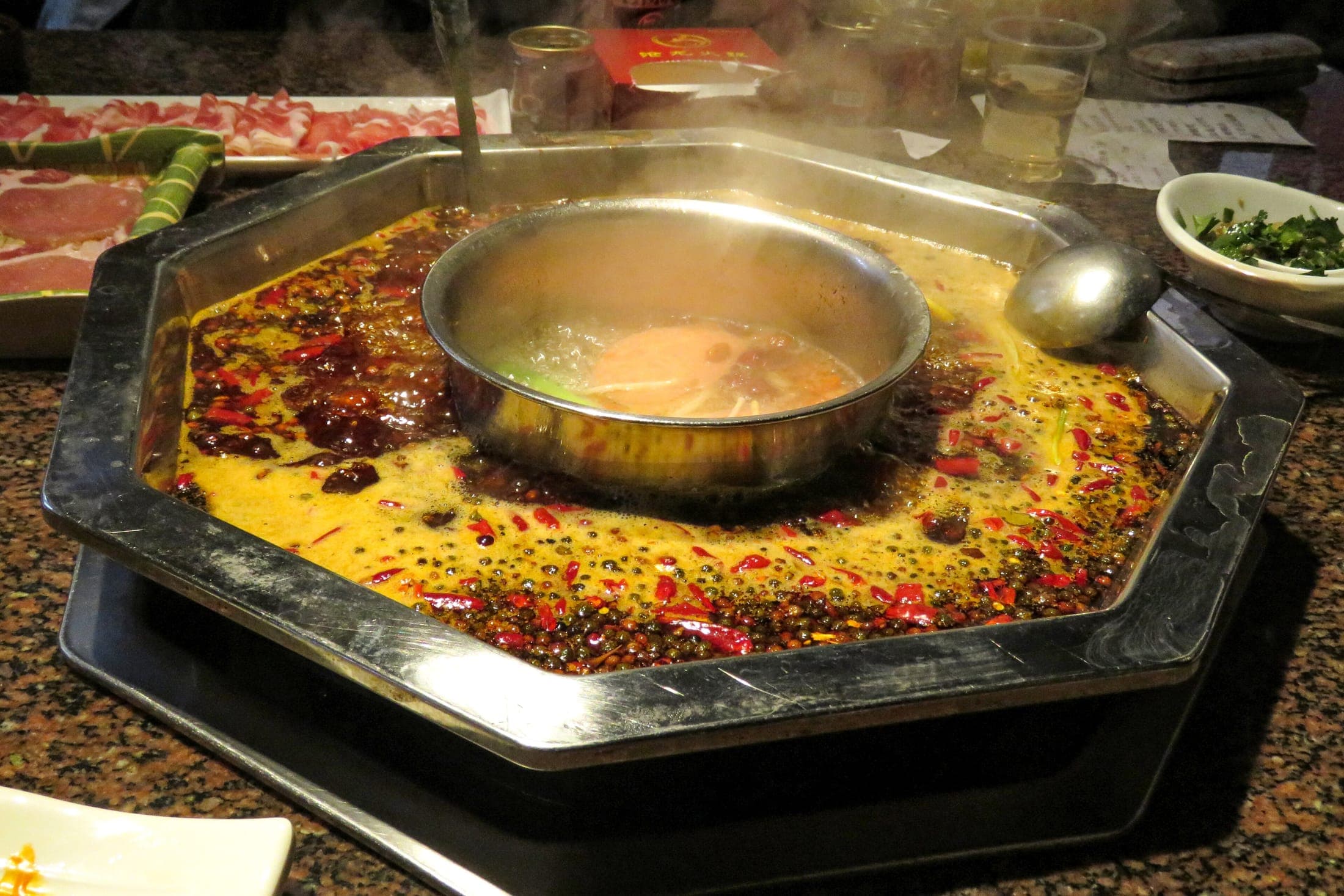
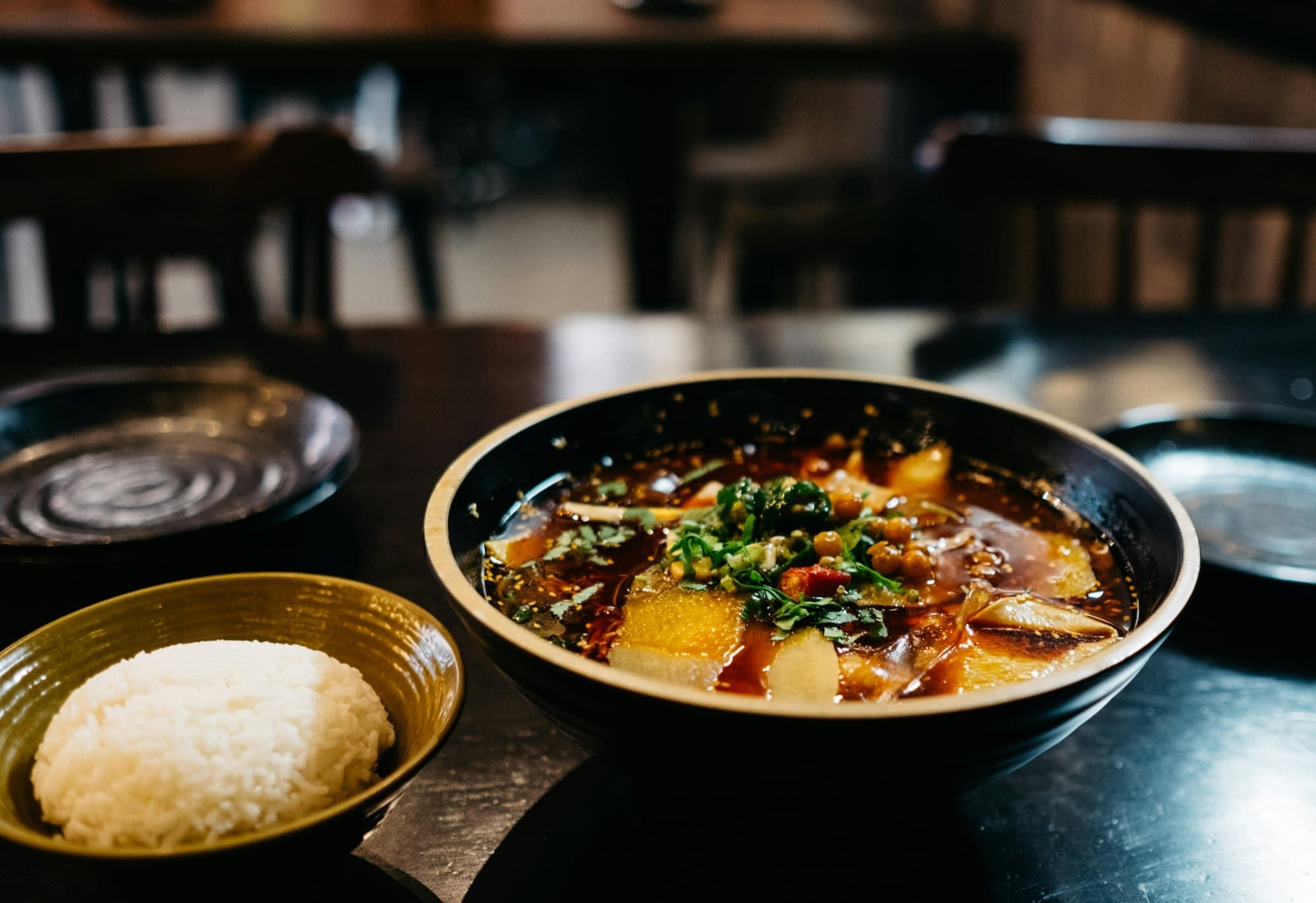
The evening is the ritual: traditional hotpot (火锅), the fiery broth with the fire at the centre of the table, where every morsel cooks itself and Sichuan pepper numbs your lips before it warms everything else. We sit where the locals eat — not the postcard restaurants, but the smoke, the noise, the sweat that here means good company.
Only with usHotpot isn't a dinner: it's a way of being together, elbow to elbow, in the steam. The pepper stays on your lips for hours, like a good memory.
Yibin
The first city on the Yangtze: villages on the water, bamboo forests and the most famous baijiu in China.
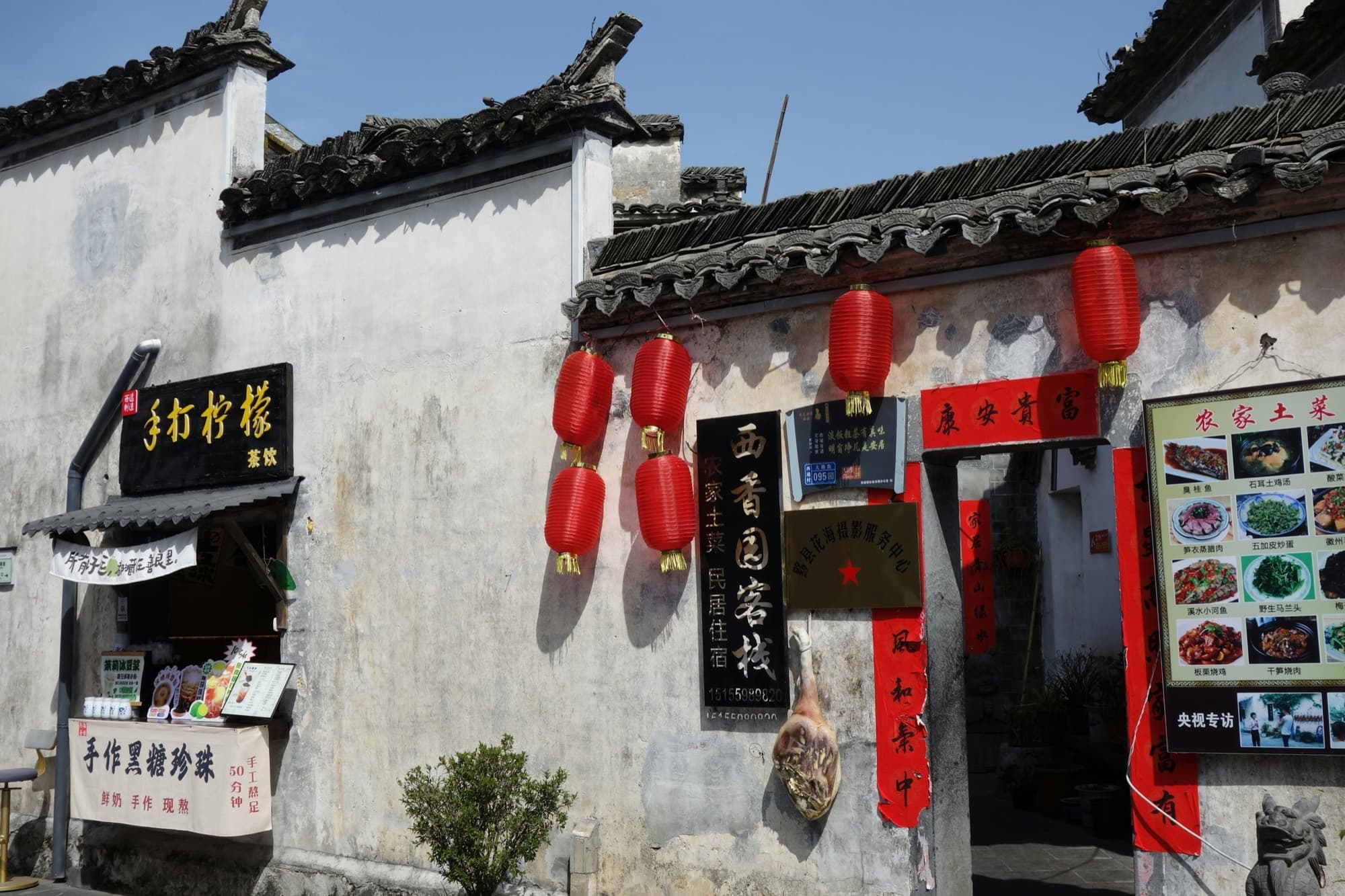
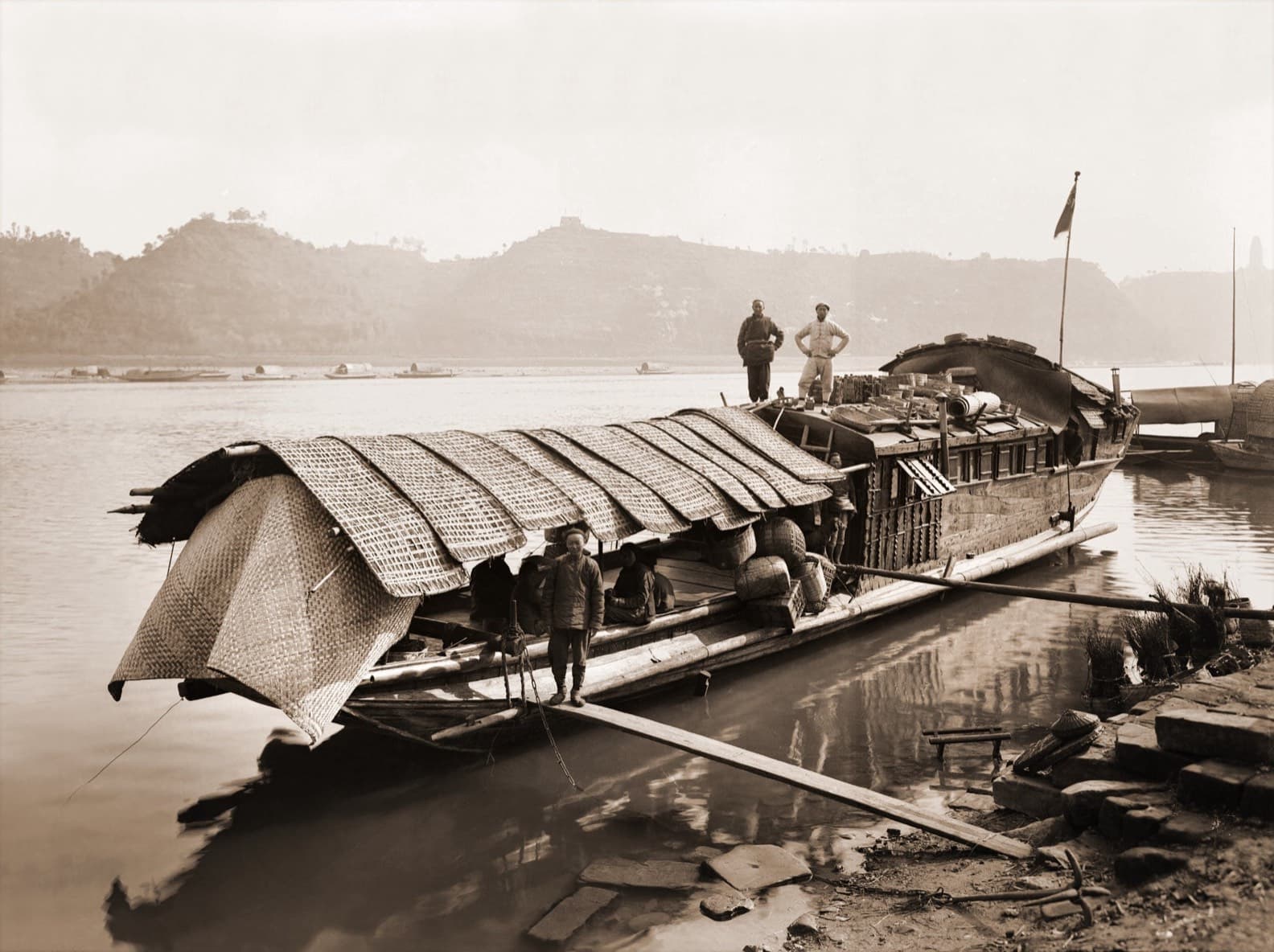 Historic boats on the Yangtze
About an hour and a half of high-speed rail and we step off at 宜宾 (Yibin), where the Min and the Jinsha meet and — officially — the Yangtze is born. Yibin is "the first city of the ten thousand li of the Great River": here Sichuan turns deep, far from the well-worn routes.
We reach Lizhuang (李庄), a town of almost 1,500 years that in the war years took in universities and scholars in flight. Paved streets, hidden courtyards, portals of dark wood. Here *we put on traditional dress (the hanfu)* to walk the town as it once was: not a costume, but a way of slowing to the right pace.
We go down to the river, where the old wooden vessels still sail — the historic Chinese boats that for centuries tied together the towns along the Yangtze. A slow crossing, the water flowing and the town drawing away behind us.
Lizhuang is the place where you realise China doesn't only race forward. It runs backward too, in a way you already miss as you leave it.
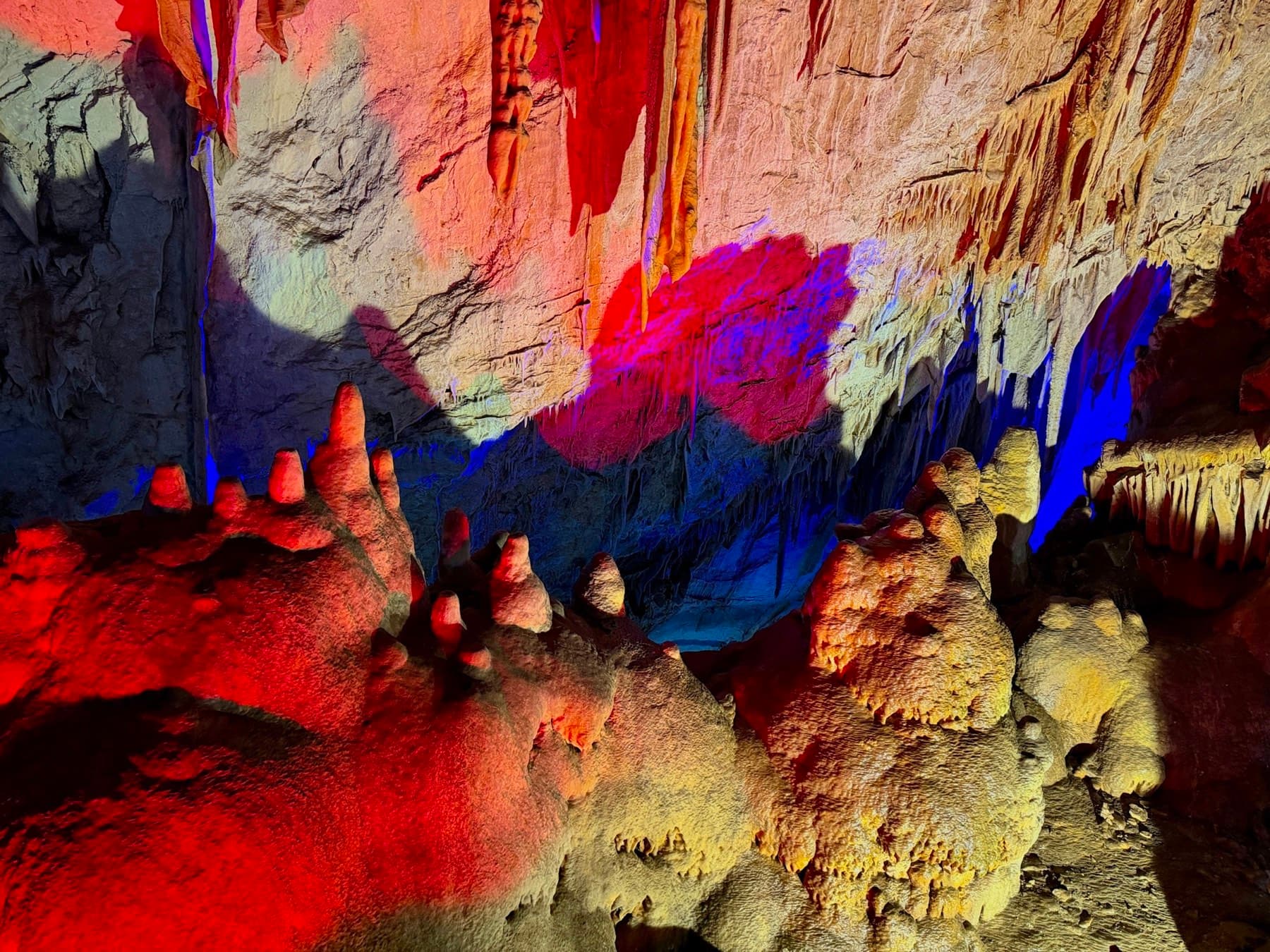 Xingwen Shihai
 Tea mountains
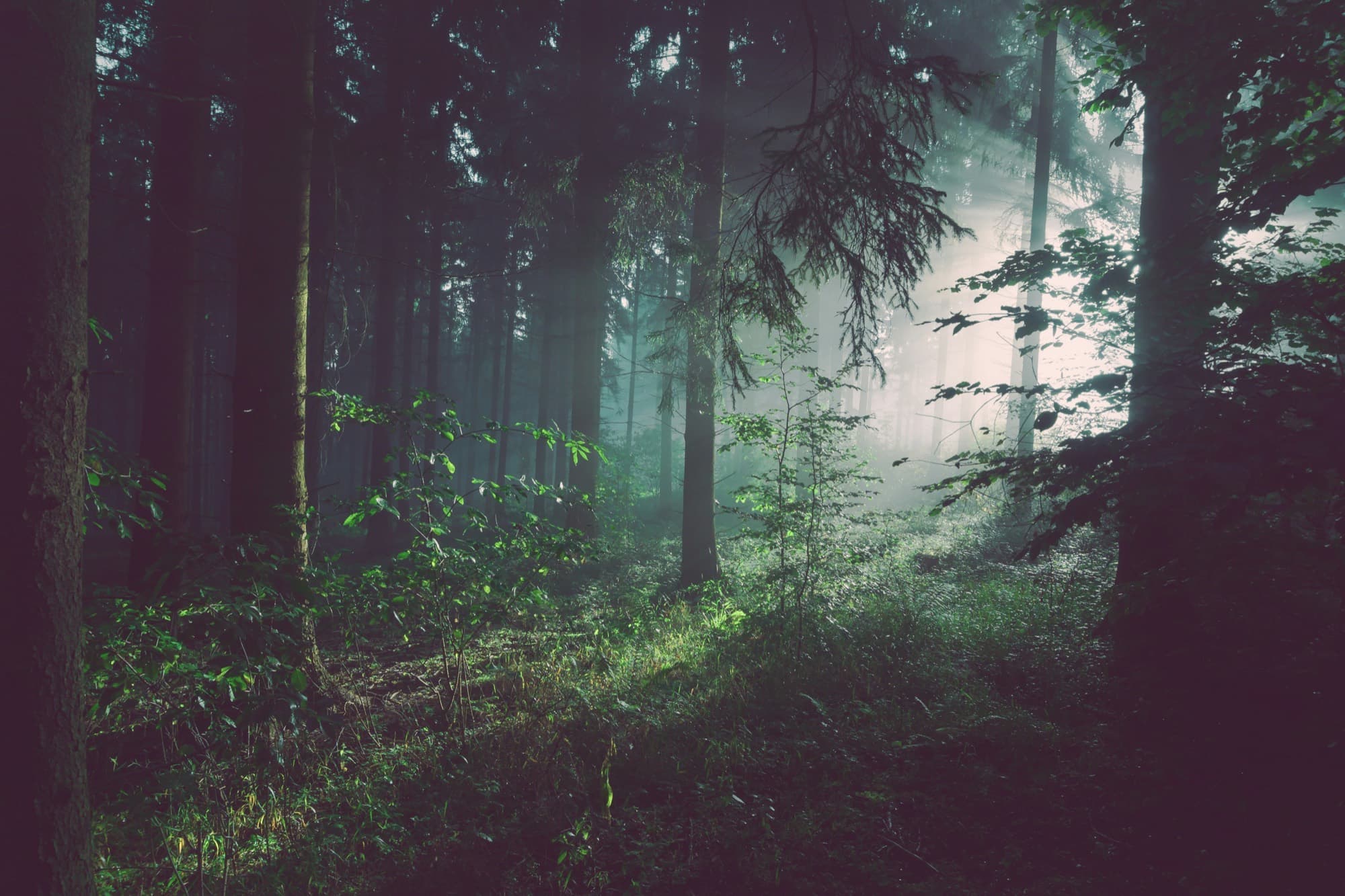
The Shunan Bamboo Sea (蜀南竹海) is exactly what its name says: a green ocean of 120 square kilometres, canes thirty metres tall, paths where the light arrives filtered to emerald. This is the set of Crouching Tiger, Hidden Dragon — and walking through it you understand why Ang Lee chose it. The air is several degrees cooler, the oxygen denser, the rustle of the canes the only sound.
In the afternoon, the landscape turned inside out: Xingwen Shihai (兴文石海), a karst geopark where the earth splits open all at once. Vertiginous sinkholes, forests of limestone pinnacles and immense caves beneath your feet, with underground lakes and halls where the only sound is water dripping. From the bamboo forest to the forest of stone in a single day.
An unhurried return. Yibin in the evening is quiet, provincial in the best sense: a stroll along the riverfront, the evening tea, a Sichuan that here is in no hurry to win you over.
A unique ecosystem
Shunan is the largest bamboo forest in China: 58 varieties, a microclimate 5–8 °C cooler than the plain and a markedly higher oxygen level. Not far off, the Xingwen geopark holds one of the country's most complete karst landscapes — sinkholes, forests of stone and networks of caves carved over millions of years. Two natural wonders a step from each other, and almost no Western tourists to see them.
In the bamboo, the world out there ceases to exist. Tomorrow it will return. But tonight, we stay in the green.
 Sichuan Opera
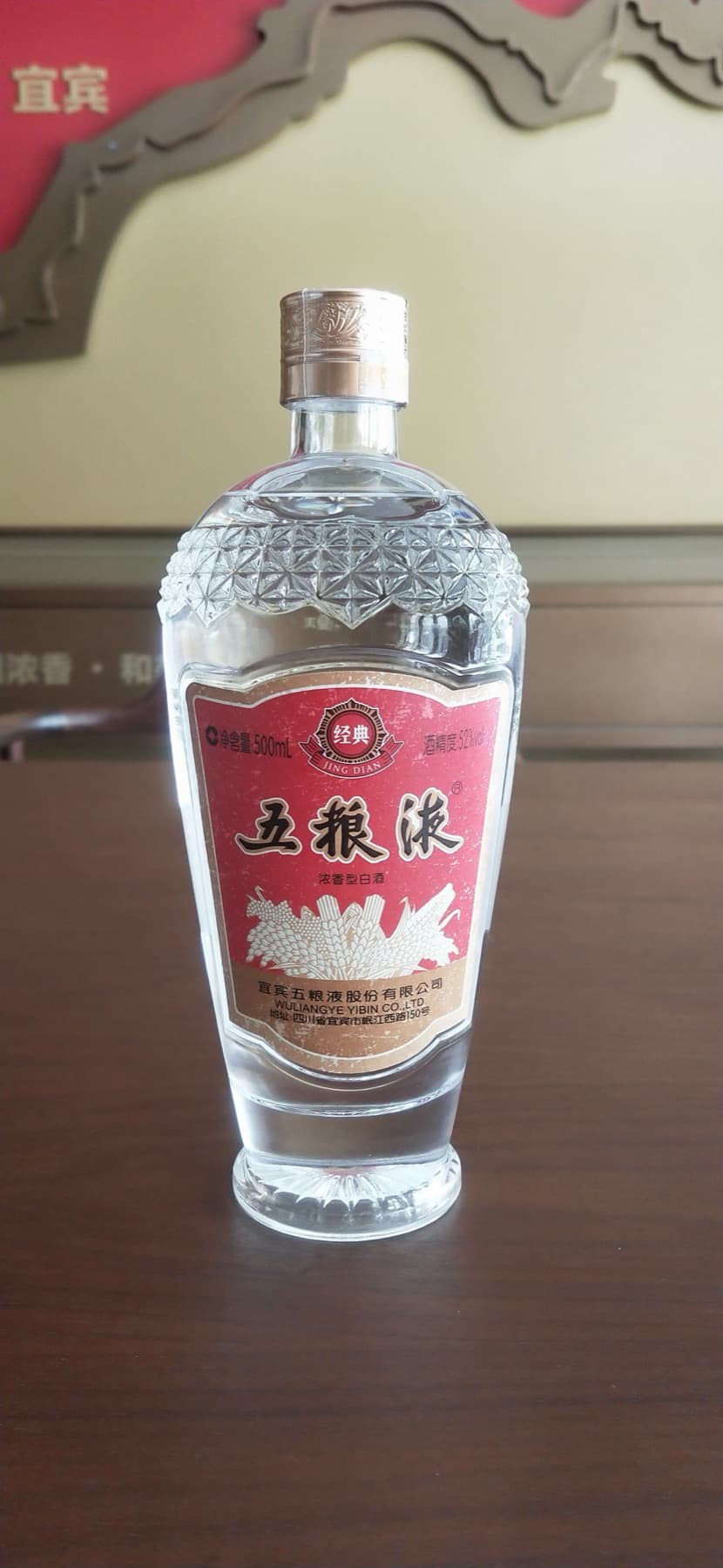
We step inside the Wuliangye distillery (五粮液) — one of the most celebrated and decorated baijiu in China — for a private visit, normally closed to tourist circuits. We walk the cellars where the liquor rests in century-old jars, the dense scent of the five grains, the fermentation pits in use for centuries. It isn't a stop on a tour: it's a door that opens because we know the people behind it.
Only with usAt the table with ranmian (燃面), the famous "burning noodles" born right here in Yibin — dry, glossed with oil, buried under chilli and peanuts — followed by a local traditional barbecue, skewers over the coals in the manner of deep Sichuan. Lunch is part of the experience, not an interval.
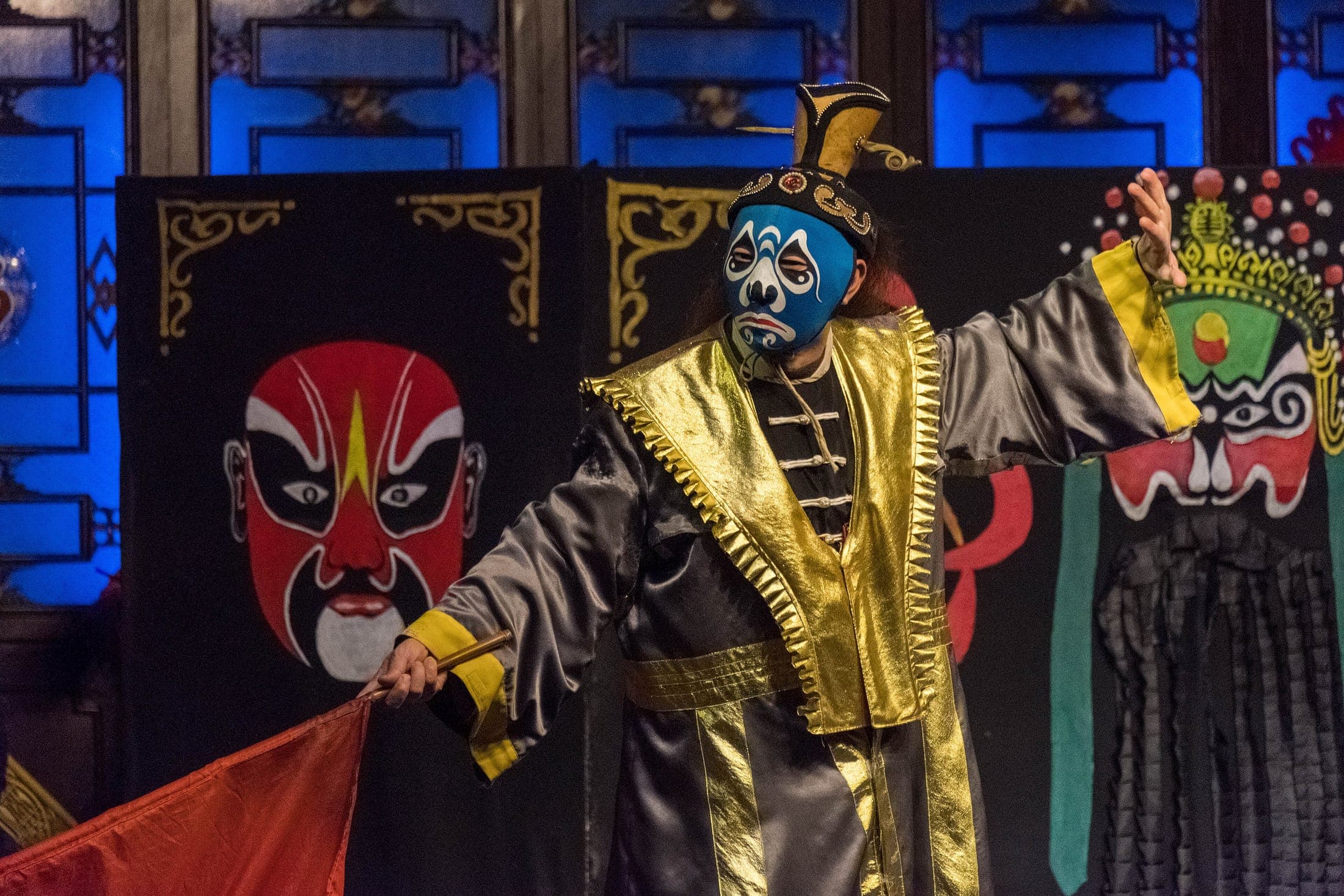
The evening closes in style: a tea ceremony and a performance of Sichuan Opera (川剧) with the legendary bian lian (the face-changing), masks shifting in a single flash — staged privately, for our group alone. The ancient arias, the tea poured slowly, and that last piece of magic no ticket on sale could ever hand you.
Only with usWhy we can get in
The private Wuliangye distillery and the Sichuan Opera staged for us alone cannot be bought through the usual tourist catalogues. They exist because one of our founders built his life in China, became a point of reference for the local community, and turned years of direct relationships — with companies, institutions and cultural bodies — into real operational reach. We are not simple middlemen: we are part of the place. That is the difference you carry home.
There are days you can buy and days that open for you. This one opened because someone, here, knows us.
Chengdu
The Sichuan finale: the Giant Buddha of Leshan, the giant pandas and the wellness of 成都.
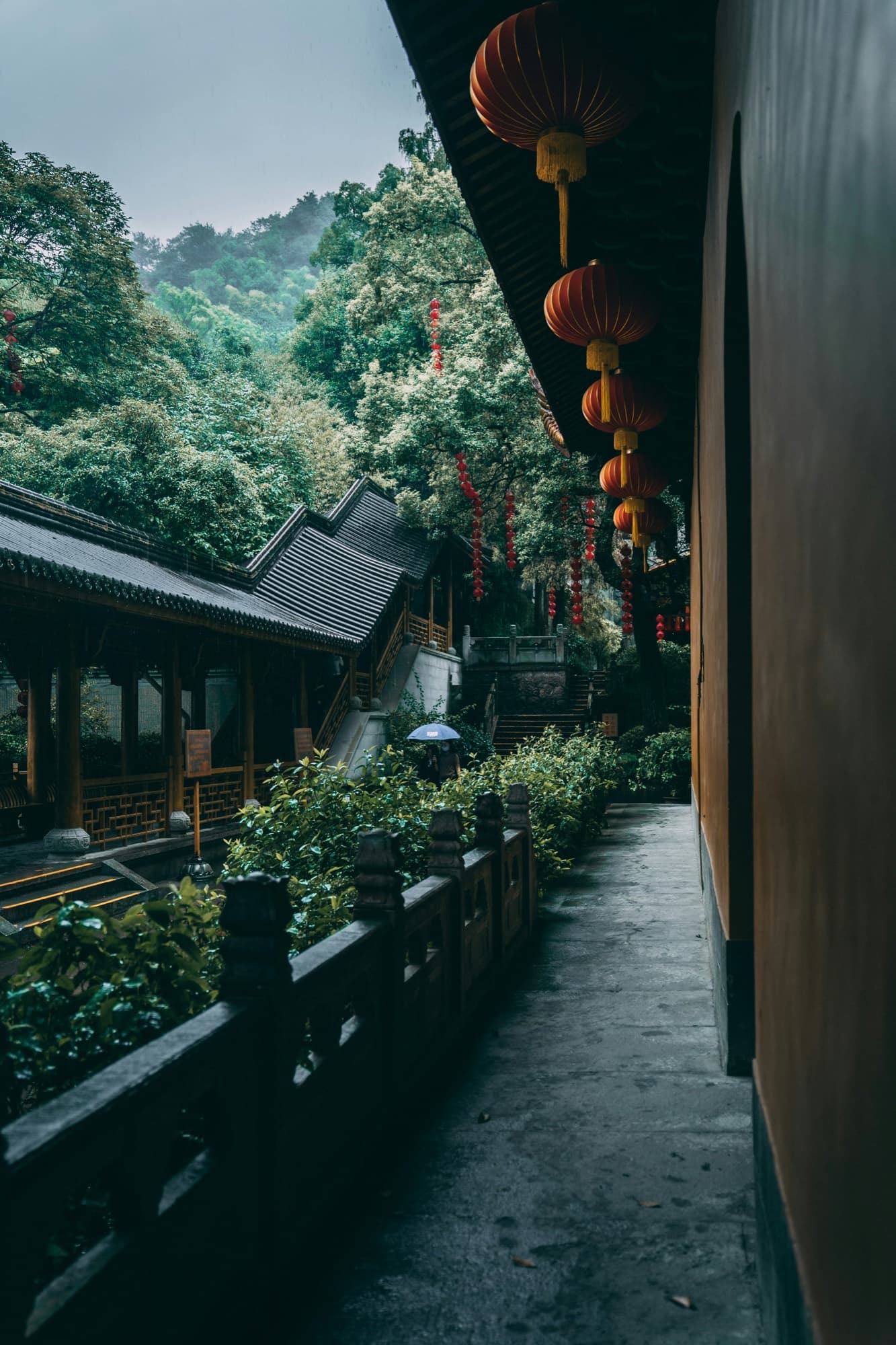
We head back north by private coach, crossing the Sichuan countryside toward Leshan (乐山). The overland journey lets us see the country of villages, rice paddies and markets — the one that slips by too fast from the train.
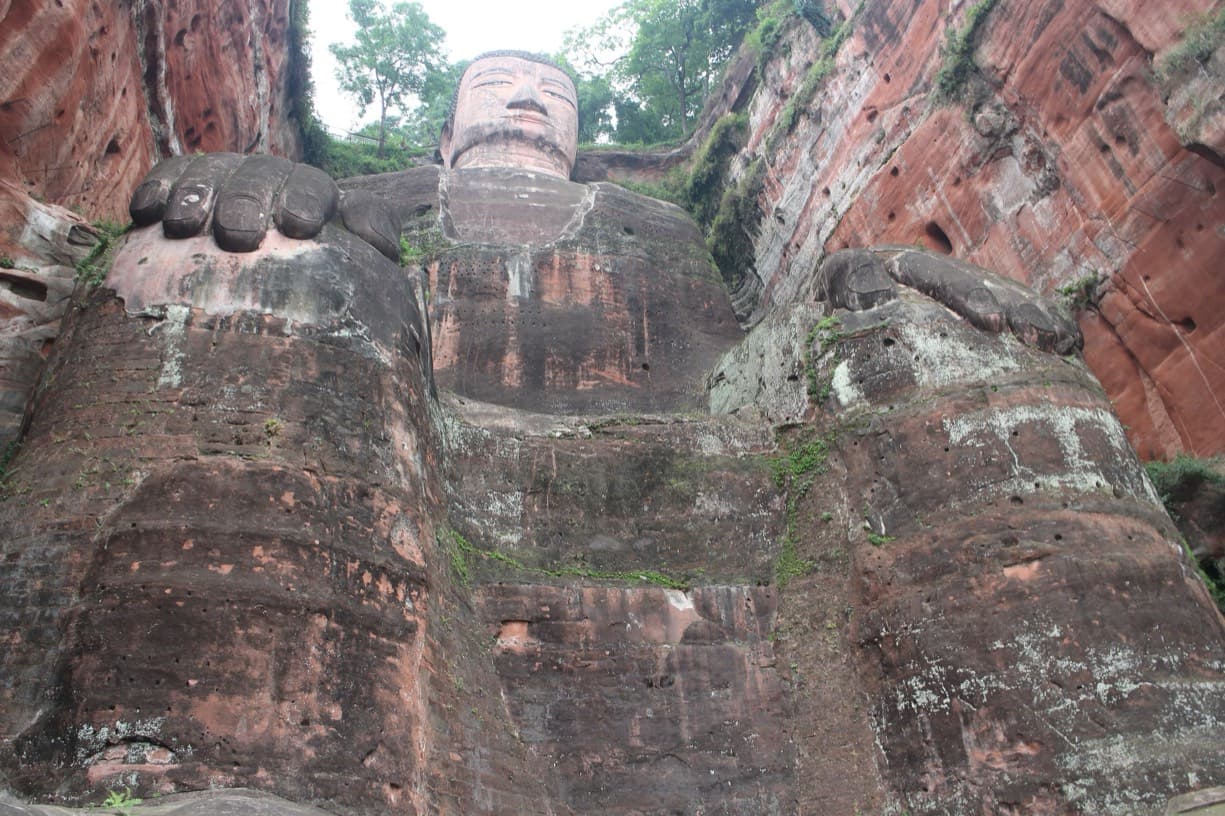
The Giant Buddha of Leshan (乐山大佛) can only be measured from below, from the water: 71 metres of stone carved into the cliff at the confluence of three rivers, the largest stone Buddha in the world, hewn over ninety years from the year 713. From the boat, its feet stand taller than we do. Lifting your eyes and finding no end to it is the whole experience.
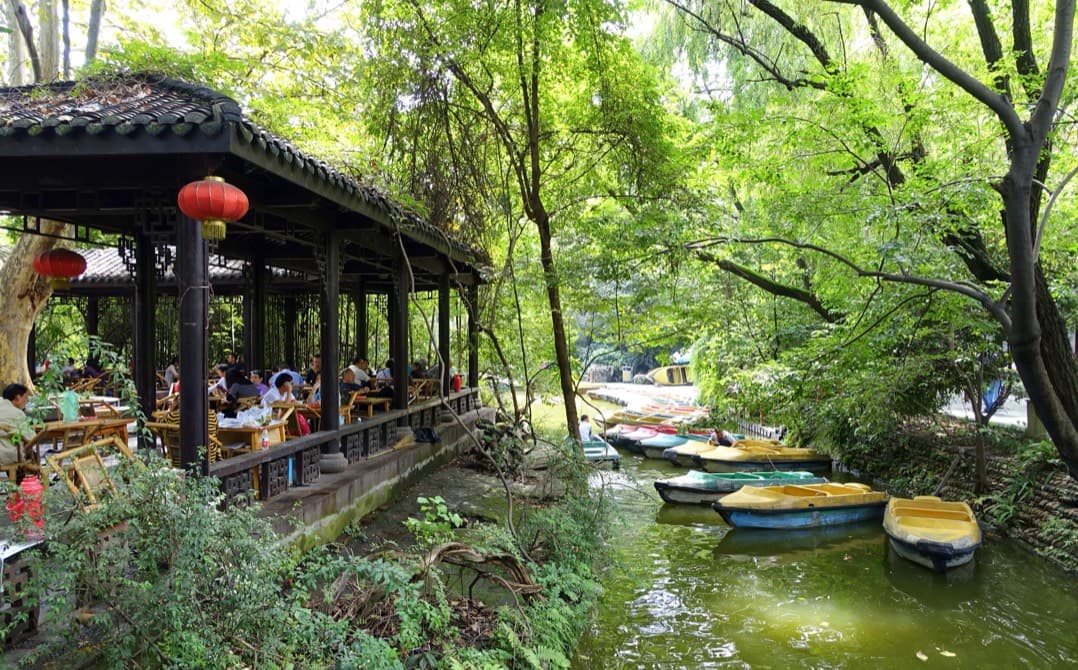
In the late afternoon we arrive in 成都 (Chengdu), the journey's final stop. The capital of Sichuan welcomes us with its soft rhythm, its tea houses, the air of a city that knows how to live. A free evening to let the last city settle over you.
A century for a Buddha
The Giant Buddha was begun in 713 by a monk, Haitong, convinced that the Buddha's presence would calm the turbulent waters capsizing boats at the meeting of the rivers. It took 90 years to complete. Curiously, it worked: the mass of rubble that fell into the river during the carving genuinely softened the currents. Faith and engineering, carved into the same cliff.
Before the Leshan Buddha you feel exactly the right size: small. It's a good way to arrive at the last city.
 Wellness spa
 Twin Towers of Chengdu
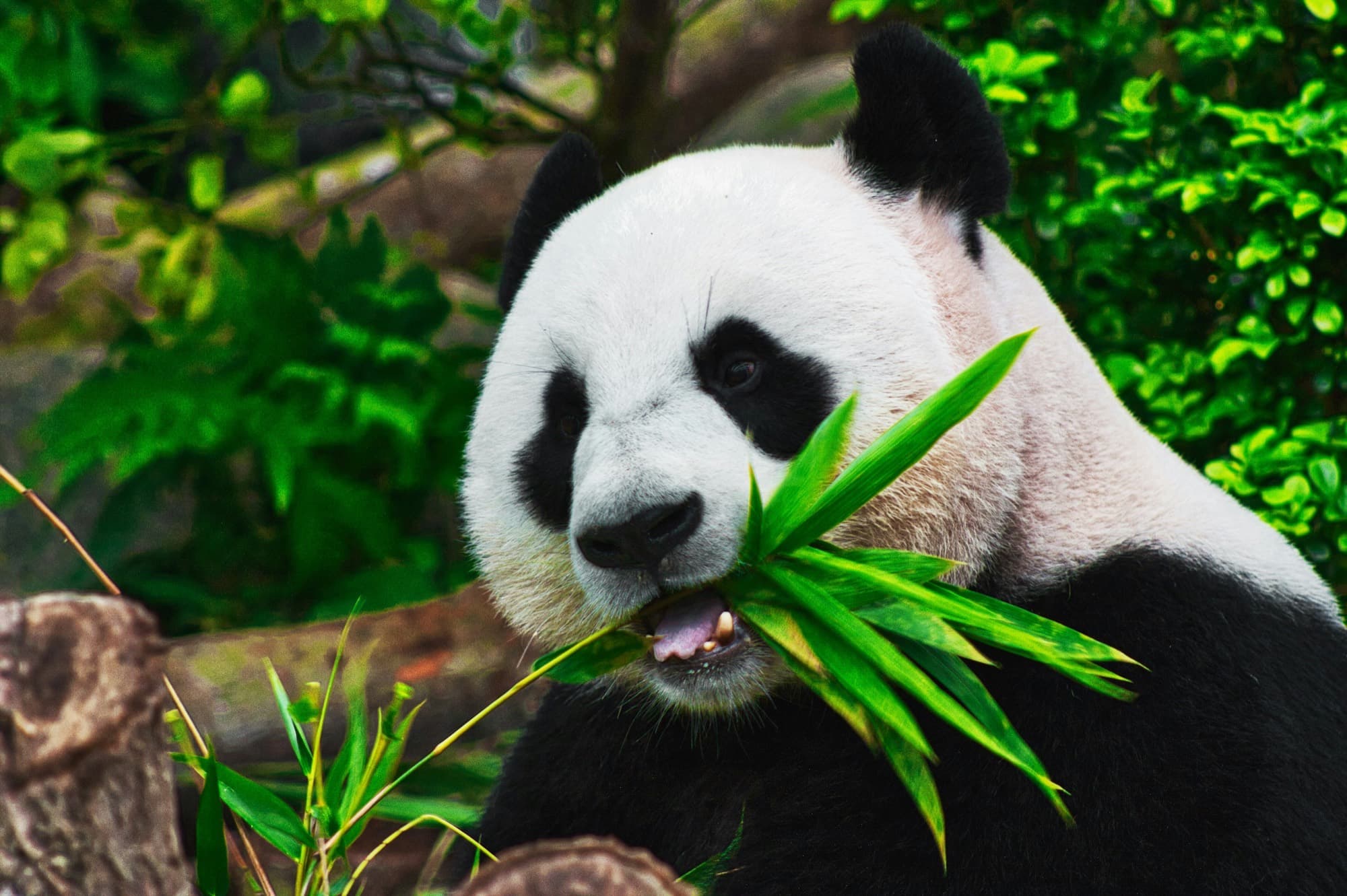
We go early to the Giant Panda Base (大熊猫基地), when at dawn the pandas are at their liveliest: cubs rolling in the grass, adults munching mountains of bamboo with a regal calm, red pandas climbing with surreal agility. Early morning is the moment — later they doze off and the park fills up.
The afternoon is given over to wellness: one of the city's most renowned spas, a genuine institution across four floors, with thermal baths, tea rooms and massage — already included in the trip. After two weeks on the move, the body is grateful, and here Sichuan takes care of you.
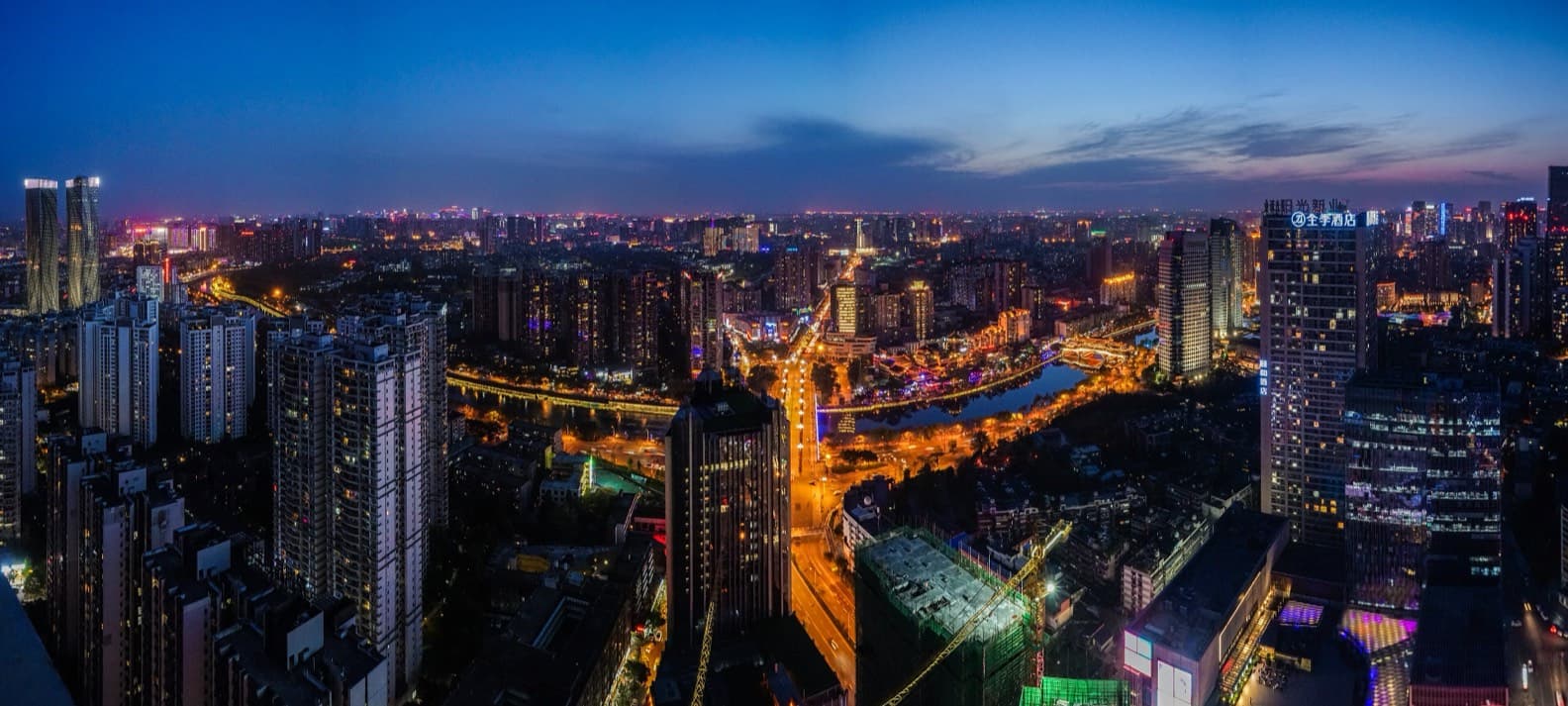
We close with the evening show of the Twin Towers of Chengdu (双子塔), which light up with projections above the city. On the last evening you look up, the lights dance, and China bids you farewell the way it began: on a grand scale.
Pandas in the morning, thermal baths in the afternoon, lights in the evening. Chengdu knows how to say goodbye: slowly, and with tenderness.
The last breakfast in China — the last steamed baozi, the last tea poured slowly — and time for the final purchases: fine tea, Sichuan pepper, a keepsake with the pandas. You savour every one of them, knowing that tomorrow you'll miss it.
Transfer to the airport and the return flight, included. You go home with the China that usually stays invisible pressed into you: not a holiday, but a complete experience — and the distinct sense of having joined a family rather than an itinerary. 再见 — until we meet again, China.
Fifteen days. Five cities. A China that will never stop surprising you. You don't come back the same. And that is the whole point.
包含 What it includes
Included in the price
Not included
体验 Extra Experiences
Tailor your journey with exclusive experiences, bookable at the quote stage.
Your journey to China begins here.
15 days from Beijing to Chengdu, five cities and the China that stays invisible. Flights included, along with hotels, trains, a private guide and an Italian tour leader. Choose your date, tailor the experiences and receive your bespoke quote.
All inclusive, flights included.€3.200 · per person